Natural sites in Espoo
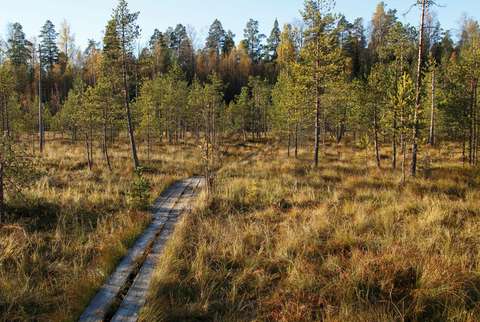
For a city of its size, Espoo still has exceptionally large and diverse natural areas of great value. The vast forest areas of Northern Espoo and Central Park are enlivened by bare cliffs, lush groves and small mires. The marine coastline and archipelago characterise the landscape of Southern Espoo.
Valuable natural sites, such as nature reserves, natural monuments and interesting geological sites can be found everywhere in Espoo. Go on an adventure and learn about Espoo’s specialties! More excursion destinations in Espoo can be found on the Explore nature page.
Espoon keskus: In Espoon keskus, it is worthwhile to get acquainted with the natural sites along the Gumbölenjoki and Glomsinjoki rivers: the fishway and Myllykoski rapids in Gumböle and the Myllykoski rapids and Lommila meanders in Glomsinjoki. Kannusillanmäki is a particularly good place for butterflies: more than 700 species of butterflies have been found there.
Kauklahti: The interesting natural sites of the Gumbölenjoki river stretch into Kauklahti, where you can find, for example, the magnificent maple wood, rapids and oxbow lakes of Gumbölenjoki. The Fiskarsinmäki hill in the Espoonlahti nature reserve also has a nature trail and bird-watching tower.
Central park: Espoo Central Park is an important outdoor and recreational area. By following the Tikankierros nature trail, you can easily reach Central Park’s glacial potholes, the Mössenkärr nature reserve and the Rönnängen meadow.
Espoonlahti: One of the area’s specialities is the purple shell deposit located in the Bergö-Ramsö nature reserve. Another good excursion destination is the Hanikka nature trail, along which you will find, for example, Kaitalahti with its valuable birdlife and the ancient shoreline of Soukka.
Archipelago: The Diksand beach in Pentala is the finest sandy beach existing in the Espoo archipelago in its natural state, while Rövaren has several stunning geologically valuable sites. There are also great natural sites in Gåsgrund and Stora Herrö, which are served by archipelago boats in the summer.
Matinkylä-Olari: Friisinkallio is a diverse and representative natural site with geological value. The Finnoo wastewater basin has valuable birdlife, and birds can be observed even without binoculars from the nature trail around the basin.
Tapiola: The Laajalahti nature reserve is part of the Natura 2000 network, as the bay has very significant birdlife. Nature House Villa Elfvik, located on the edge of the nature reserve, serves as the city’s environmental education centre.
Leppävaara: Monikonpuro is among the most beautiful running waters in Espoo. The brook is also ecologically diverse, and the endangered sea trout swims upstream in it in order to spawn. The gorgeous oak tree avenue in Kilo is reminiscent of the manor culture of yesteryear.
Laaksolahti: The Träskända nature reserve is a nationally significant cultural and historical environment and one of the oldest protected areas in Espoo. The Träskända nature trail circles around the old manor park. There are also several nature sites worth seeing along the Glimsinjoki riverbank trail.
Bodom: Matalajärvi is one of Espoo’s Natura 2000 sites. The lake has valuable birdlife, and there is a bird-watching tower on the shore. The former agricultural area has several old traditional landscapes and pastures.
Kalajärvi: The Tremanskärr nature reserve is a very diverse and valuable wetland. The Kurkijärvi forest nature reserve, in turn, contains valuable forests that have been preserved in their natural state, in which several endangered species have been found. The Tremanskärr nature trail takes you through the most magnificent natural sites and landscapes of both nature reserves.
Velskola: In addition to the valuable nature, the Luukki outdoor recreation area features interesting geological sites, such as the ancient shoreline of Luukki, Hauklampi cliff and Käärlampi boulder. In Velskola, you can also climb to the highest point in Espoo!
Nuuksio: In addition to Nuuksio National Park, the places worth seeing include Sorlampi, where a nature trail around the pond takes you to the Hiidenpesä cave, glacial potholes and the valuable bog of Hackjärvsmossen.
Kotinurkilta kallioille – Espoon luontokohteet: a book on Espoo’s natural sites
Published by the Espoo Public Works Department and the Environmental Protection Unit, the book Kotinurkilta kallioille – Espoon luontokohteet (2021) presents a total of more than 300 natural sites worth seeing in different parts of Espoo. The book’s magnificent photographs and illustrative maps guide you on your journey to the neighbourhood cliffs, duckboards and archipelago of Espoo. The book was edited by Katrin Aia and Jussi Helimäki.
The book Kotinurkilta kallioille has only been published in Finnish.
Espoo’s natural sites in the Citynomadi app
All the sites featured in the book Kotinurkilta kallioille can also be found in the map-based Citynomadi (external link, opens in a new window)app. The application helps you to find interesting excursion destinations and presents the natural sites from the book in a form suitable for mobile devices even during the excursion. Espoo’s natural sites can also be found in the browser version of Citynomadi, which also works on a computer.
Espoo’s natural sites can only be found in the app in Finnish.