Seed banks, sustainable demolition, and creative writing – these are the sustainable development trials we carried out in 2025
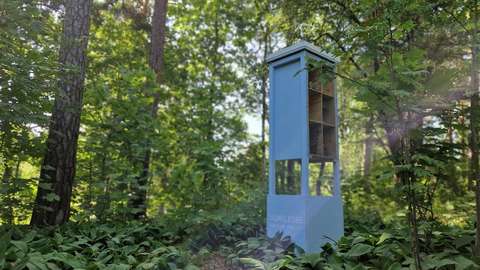
Did you notice something new in the city? It could have been a trial. The world needs new, more sustainable solutions, and one proven way to discover them is through various trials. In this story, we introduce trials launched in 2025 by Espoo’s Centre of Excellence for Sustainable Development.
Many global environmental challenges are addressed at the local level. Trials are a natural way for cities to advance solutions that promote carbon neutrality, the circular economy and biodiversity. In trials, the city tests a new practice or service for a limited time to see how it works, what it requires and how users react.
In Espoo, most trials are carried out in partnership with others. We do not have to do everything ourselves – nor should we. Instead, we cooperate with companies, educational institutions and civil society, supporting and strengthening one another along the way.
What could a nature-wise urban environment look like? How can we turn climate anxiety into action? How can we encourage people to hop on a bike even in winter? These are some of the questions we explored through trials in 2025.

Everyday sustainability
The city exists for its residents, which is why last year we carried out several trials that brought solutions for sustainable living closer to everyday life.
Libraries hosted open writing workshops and clothing repair workshops. Creative writing offered participants insights into their everyday choices. In clothing repair workshops, participants learned mending, patching, and creative upcycling.

In a trial aimed at mental health rehabilitation clients, we offered low-threshold experiences of climate-friendly living. For example, participants prepared planetary and vegan meals, made use of surplus food, visited second-hand markets, practised handicrafts, and spent time in nature. Brief, targeted experiments reinforced participants’ belief in their own abilities.
In a trial aimed at alleviating climate anxiety among young people, a climate organisation developed a three-lesson climate change course for general upper secondary schools. Its goal was to increase young people’s understanding of climate change and empower students to take part in local climate work.
Connecting with nature
Proximity to nature is one of the most beloved features of our city, which is why we are constantly seeking new ways to support and draw inspiration from it. In nature-themed trials, we promoted contact with nature from infancy to old age and collected data on urban nature.

At the Planetary Garden, established in northern Espoo, and in the Transition Village Jupperi, we explored how nature’s unifying power can be harnessed. The events and workshops organised at these sites gave participants a sense of meaning, community and empowerment as they faced shared challenges.
In the capital of children and youth, nature was of course also brought closer to children. In the Eläköön Piha! trial, tools were developed to support children’s contact with nature and improve their nature literacy. The trial provided valuable insights into different needs, and the materials developed were immediately made available to early childhood education staff in Espoo.

Two of the nature-related trials also had target groups beyond us humans. A new type of green wall was tested, built as far as possible from reused materials and soil salvaged from construction sites. This way, the area’s original substrate could be preserved within the structure during construction and returned once the work was completed. In the other trial, local biodiversity was mapped using bees.
Getting wheels turning
Mobility-related solutions are one of the most visible ways to make a city more sustainable, safe and pleasant. We need solutions that make walking, cycling, using public transport, and the electrification of vehicles smooth and convenient parts of everyday life.
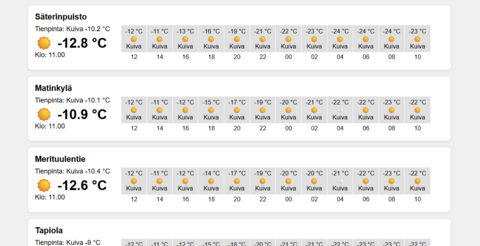
Cycling was encouraged in several trials. At bike maintenance training stations set up across the city, residents were able to service and repair their bikes themselves with the help of professionals. To support year-round cycling, we tested weather data sensors that provided online information on local road surface conditions, such as slipperiness and snow cover. A new type of modular bike parking structure explored how parking, recreation and urban greenery could be combined.
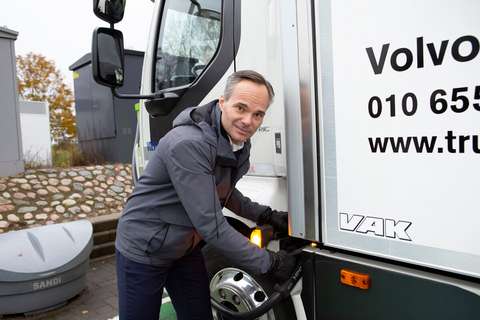
On the motor transport side, we tested electric trucks. In the pilot, an electric truck operated six days a week in Espoo along a typical delivery route, demonstrating that electric vehicles are well suited for grocery distribution as well. Interestingly, our post about the electric truck was one of the most popular ones on our Instagram account that year!
Sustainable property maintenance
The rest of the trials focused on the sustainable life cycle of the city-owned buildings. How can we make construction, demolition and property maintenance more sustainable?
The demolition of the Pohjois-Tapiolan koulu school building provided an excellent platform for testing circular economy practices. The school’s built-in furniture was sold, and bricks from the façade were removed intact and cleaned for reuse. The experiences gained from the trial were positive and encouraging.

The energy-saving trial at Kaitaan koulu school was a real success. During a two-week trial period, pupils and staff reduced the school’s energy consumption through small, simple changes. These included making better use of natural light, turning off lights and devices when not in use, and keeping coffee warm in a thermos in the staff room. In just two weeks, these small and easy actions saved around 50 euros in energy costs! This is definitely an experiment worth expanding.
What’s next?
Several new trials are also planned for 2026. For example, last year we started preparations for using battery buffering to support electromobility and for introducing new types of parcel delivery solutions on the streets. We also organized an innovation challenge for solutions related to the reuse of building elements, and the winning proposal will be piloted in 2026.
With the exception of the energy-saving trial at Kaitaan koulu, the trials presented in this article were carried out as part of projects co-funded by the European Union and coordinated by the Centre of Excellence for Sustainable Development. Learn more about the projects:
- Sustainable Future districts
- Circular Buildings
- Innovation Challenge Engine for Cities
- COMET – Espoo Climate Community.
To stay up to date on future trials, subscribe to our newsletter(external link, opens in a new window)!