Espoo strengthens its climate work with additional measures and proposes new goals for 2040
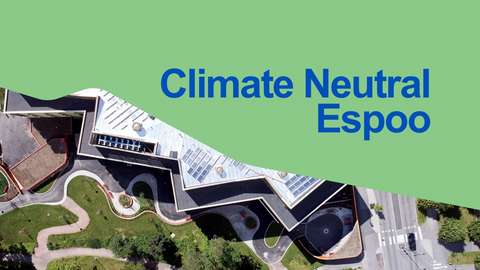
Espoo is proposing new measures to reduce climate emissions in transport, energy and construction. A new long-term climate goal is also being proposed for decision-making. The new goal is to reduce greenhouse gas emissions produced in the Espoo region by 90% from 1990 to 2040.
Espoo has halved its climate emissions since 1990 while the city’s population has nearly doubled over the same period. Espoo’s emissions per capita are among the lowest in Finland. However, climate measures will be further strengthened in order to achieve Espoo’s climate goals.

New measures to reduce emissions, especially in transport
Transport is the largest source of climate emissions in Espoo. Electrification of the car fleet, steering city growth towards good public transport connections and promoting walking and cycling will reduce climate emissions in the area, but the current pace of change is not sufficient to achieve the city’s emission reduction goal. Emissions from vans and lorries have the greatest emission reduction potential, as electrification of the passenger car fleet in Espoo is already progressing faster than in the rest of the country.
The city’s proposal involves introducing zero-emission zones for lorries and vans as a new measure. At the same time, Espoo will facilitate development of the charging network and boost cooperation with companies and authorities as well as municipalities in the Helsinki Metropolitan Area to increase the use of low-emission transport and to efficiently introduce new solutions to meet needs in the transport sector.
Although Espoo can accelerate the pace of change in transport in line with its goal, this alone will not be enough. Achieving the city’s emission reduction target will also require national solutions and measures from the Finnish government.
“Reducing transport emissions is crucial in terms of the 2030 climate goals of large cities. Our new proposals aim to accelerate the transition to electric and other fossil-free power sources in Espoo – especially for vans and lorries – by introducing zero-emission zones. We also need the state to support transport operators as they acquire new vehicles. The EU Social Climate Fund national plan, which is currently being processed by the Government, would be an excellent tool for directing money to this purpose and helping operators find an alternative to the rising costs of fossil fuels,” says Mayor Kai Mykkänen.
In spring 2026, the Espoo City Board decided to expand the use of paid parking and to launch the Espoo Cycling Promotion Programme 2026–2036.

Additional measures to reduce emissions from energy and construction
Emissions in the energy sector will decrease significantly by 2030 due to cleaner district heating. Additional emission reductions will be sought by accelerating the pace of energy renovations in the private housing stock. Espoo is proposing investments in energy counselling and providing targeted advice on switching from oil heating to other methods.
Emissions from construction are a significant and growing part of consumption-based emissions. The city wants to reduce the climate impacts of construction by setting a city-level carbon footprint limit value for the construction of apartment buildings with at least three floors starting on 1 January 2027. Espoo aims to set a limit value that is 10% stricter than the national level. In addition, Espoo will include the life-cycle emissions of construction more clearly in its climate goals by setting a separate emission reduction target for them during the current council term.
Espoo also proposes to join the national Circular Economy Green Deal, which promotes the efficient use of materials and reduces emissions from construction.
Espoo proposes a 90% emission reduction target by 2040
The Espoo Story includes the aim to achieve climate neutrality by 2030 and make decisions on the necessary additional measures. Espoo’s climate neutrality goal is an 80% emission reduction from the 1990 level by the year 2030. The remaining 20% can be absorbed into carbon sinks or offset by other means. A further aim is to reduce consumption-based emissions, which include life-cycle emissions from construction.
Despite the additional measures proposed by the city, the 2030 emission reduction target is challenging and may not be achievable even with the proposed additional measures. According to current estimates, the target would be achieved in 2032–2034. If all current and proposed additional measures are implemented as planned, Espoo could reduce its emissions in line with the climate neutrality goal by about 73% by 2030 in comparison to the 1990 level. Espoo would achieve an 80% reduction in emissions in 2032–2034 with the current measures and the additional measures proposed in the mid-term review of the roadmap.
According to the current estimate, Espoo’s own carbon sinks would cover approximately 11% of the 1990 emission level, which is approximately half of the carbon sequestration needed to achieve the climate neutrality goal. As a rapidly growing city, Espoo’s opportunities to increase carbon sinks are also limited. It has been estimated that achieving the climate neutrality goal for 2030 would require offsetting the remaining emissions or utilising technical sinks. The city will investigate and monitor the development of the market for cost-effective and high-quality climate credits.
Espoo will also continue its systematic climate work after 2030. The city proposes a new target of reducing greenhouse gas emissions by 90% from the 1990 level by 2040. A further target is to maintain the amount of natural carbon sinks at 10%.
“The new target would ensure that emissions reduction will continue in the 2030s in our growing city. Another target is to maintain the level of natural carbon sinks at 10%. This provides a long-term direction for decision-making, investments and cooperation and strengthens Espoo's position as a forerunner in climate work,” says Karoliina Isoaho, Development Manager for Climate Work in Espoo.
The Espoo City Board will discuss the updated Climate Neutral Espoo roadmap and the proposal for additional measures at its meeting on 28 September 2026. After the City Board meeting, City Council will make a decision on the roadmap update and any new targets and measures.
Read more:
Espoo proposes Finland’s first zero-emission zones for lorries and vans to reduce climate emissions
Mykkänen: “The transformation of district heating has been Espoo’s most important climate action”
Espoo has halved its climate emissions
HSY’s report: Espoo’s forests absorb more than 100,000 tonnes of carbon dioxide annually