Mykkänen: ‘The transformation of district heating has been Espoo’s most important climate action
The specific emissions of district heat production in Espoo have already fallen by nearly 90% from the peak levels in 2014. Emissions are expected to decrease to zero over the next few years. Three out of four people in Espoo live in housing that receives district heating, which makes the impact of transitioning to low-emission fuels especially significant.
Just a decade ago, district heating was still the largest source of climate emissions in Espoo, making up nearly half of all emissions in the city. District heating in Espoo was mainly produced in the Suomenoja power plants, first using coal and later with natural gas.
The transition to low-emission fuels has been a strategic, long-term plan.
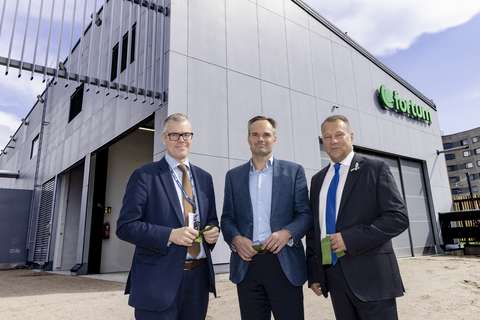
‘The transformation of district heating carried out together with Fortum has been Espoo’s most important climate action. Without working together, it wouldn’t have been possible for us to cut our climate emissions so rapidly in a city where the population growth is as fast as here,’ says Kai Mykkänen, Mayor of Espoo.
From coal to zero emissions
Espoo stopped using coal in the production of district heating entirely in April 2024. The driver of this change is the Espoo Clean Heat programme, launched as a partnership between the City of Espoo and Fortum. As a result, Fortum has begun using increasingly more electricity-based solutions in the production of district heating, such as waste heat from data centres and wastewater, electric boilers, heat pumps, and energy from biomass.
‘We started this journey together in 2017 when we decided to cut carbon dioxide emissions in heat production – at a time when legislation and the prices still bolstered the use of fossil fuels. Over the decade, the dominance of fossil fuels has clearly weakened. In Espoo, the key to reducing fossil fuel use has taken shared vision and goal-oriented cooperation. The Espoo Clean Heat
programme has shown that it is possible to quickly phase out fossil fuels,’ says Pasi Laitala, Director of Strategy and Development at the City of Espoo.
Close energy cooperation produces results
The City of Espoo is not an owner in any energy company, which means that the city has no direct control over the energy system like in municipalities that have full or part ownership in an energy company. The development of the energy system in a growing city requires close cooperation with many actors.
‘Our shared target state with the City of Espoo has streamlined planning and permit processes, among others, and created the prerequisites for new production investments. This has helped modernise district heating and keep it as a competitive, popular option for the residents of Espoo. Some great recent examples are the Nuijala heating plant and the heat pump plant for the Hepokorpi data centre which started operating this year and which are already producing heat using electric boilers and air-to-water heat pumps. Espoo is a pioneer in introducing electricity-based solutions to heating even on the global level,’ says Markus Rauramo, CEO of Fortum.
Energy solutions essential in achieving climate goals
Emissions from district heating are going to continue decreasing in the coming years, especially once it becomes possible to utilise waste heat from the planned data centre. Once the recovery of waste heat increases in stages to meet the planned extent, utilised waste heat from Microsoft’s data centres will cover about 40% of Espoo’s district heating needs in the future. Calculations indicate that the specific emissions of district heat production will fall to zero in Espoo by 2030

‘A considerable decrease in the specific emissions from the production of district heating will also mean that climate emissions will decrease in the entire city of Espoo by 2030. This highlights the important role that energy solutions have in achieving the city’s climate goals and represents an exceptionally impressive achievement in reducing emissions in the city, even in global comparisons,’ says Kai Mykkänen.
Espoo Clean Heat is a joint strategic programme between Fortum and the City of Espoo that aims to considerably cut the CO₂- emissions generated from the fuels used in the production of district heating. The programme aims to replace fossil fuels with flexible and decentralised electricity-based solutions, such as waste heat utilised from data centres and wastewater, electric boilers, heat pumps, and energy from biomass.
The specific emissions of district heating in Espoo have already fallen by nearly 90% from the peak levels in 2014. The decision to stop using coal in 2024 is clearly reflected in Espoo’s emission figures in 2025: the specific emissions of district heating decreased by 62 per cent in one year. At the same time, the share of district heating in the city’s total climate emissions fell to below 15 per cent, when in comparison, district heating made up nearly half of Espoo’s emissions in 2014. By 2030, the share of district heating in the emissions of the Espoo region will be zero. Three out of four people in Espoo live in housing that receives district heating, which makes the impact of transitioning to low-emission fuels especially significant.