Development of electric scooter services is visible in Espoo
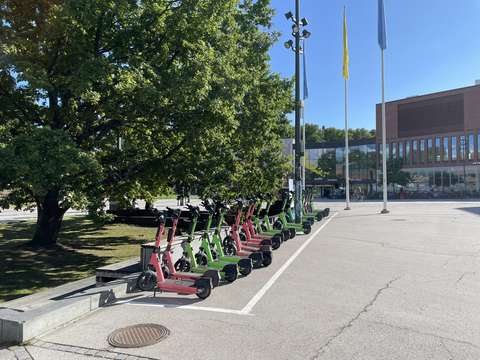
Active monitoring, improved parking solutions and the introduction of the micromobility licence have enhanced the management of electric scooters in Espoo.
The scooter season reaches its peak in early autumn, which is right now. Overall, the season has progressed smoothly so far, with no major challenges. Three electric scooter companies have operated in Espoo during the 2026 season: Voi, Ryde and Dott. By the end of August, shared electric scooters had been used for more than one million journeys. Most journeys are made on weekday mornings and afternoons, with Friday being the busiest day of the week.
Nearly 150 new scooter parking spaces
The City of Espoo prepared for the 2026 season by developing electric scooter restriction zones and parking management measures through its micromobility licence system. During the spring and summer, nearly 150 new scooter parking spaces were marked across the city. They make parking easier to manage and help clarify designated parking areas for both scooter riders and other road users. Espoo now has approximately 200 designated parking areas for electric scooters. The parking areas are shown in the operators’ apps, and up-to-date information on parking and restriction zones is also available in the Espoo map service(external link, opens in a new window).
The restrictions include no-riding and no-parking zones, low-speed zones, and mandatory parking zones. In mandatory parking zones, electric scooters may only be parked in designated parking areas. Compliance with the restrictions is managed through an app control system based on GPS technology.
The city has actively monitored electric scooter traffic throughout the season using data, field observations and resident feedback. Based on these findings, restriction zones have been adjusted where necessary and parking management measures have been further developed. The aim is to integrate electric scooters into the transport system and urban environment as seamlessly as possible.
Since the beginning of April, the city’s university interns Iiris Mäkelä and Aleksi Lohtander have advanced the monitoring and development of electric scooter restrictions. When asked whether the micromobility licence and the city’s measures have made a difference, their response is clear.
“Absolutely. Streets have become a lot tidier with regard to scooters compared to previous years, especially in the busiest areas. There is still room for improvement, but we are heading in the right direction.”
The city has already begun preparations for the 2027 scooter season. Work to create a safer, more pleasant and more accessible urban environment is ongoing. The areas of development include bus stops along trunk bus routes, where the city aims to make scooter parking arrangements clearer. The aim is to improve access to bus stops by scooter while also ensuring smooth traffic flow and barrier-free access for everyone. In practice, this means introducing additional parking restrictions and new parking spaces.
Checklist for electric scooter riders
- Electric scooter riders must follow the same traffic rules as cyclists.
- Scooters must be parked in accordance with the Road Traffic Act and with consideration for other road users. Riders are responsible for ensuring that scooters are parked correctly.
- Riders must be at least 15 years old.
- Riding an electric scooter while intoxicated is prohibited. The blood alcohol limit for riders is 0.5 per mille.
- It is prohibited by law to ride on the pavement or have another person on the scooter.
- The use of a helmet is recommended.
Read more about electric scooters and the micromobility licence: www.espoo.fi/en/transport-and-streets/sustainable-forms-transport