Social inclusion and wellbeing of Espoo residents mainly at a good level – however, investments should be made in reducing the differences
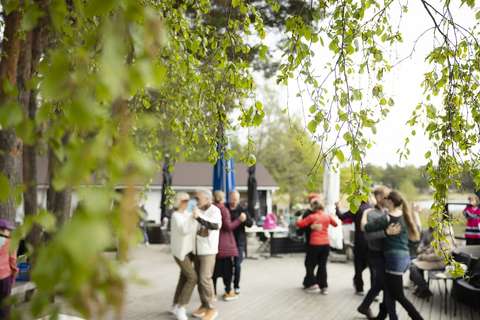
This year, we conducted a new social inclusion and wellbeing survey for the first time to obtain better information on the experienced social inclusion and wellbeing in different population groups. Although the majority of people are doing well, we must support some of the residents better in future.
The social inclusion and wellbeing survey carried out for the first time in Espoo this year was posted to randomly selected Espoo residents in early 2026. The survey was conducted in ten of the most commonly spoken languages in Espoo, and it was possible to respond to it by letter or online. In addition to random sampling, persons with disabilities and sexual and gender minorities were approached by contacting non-governmental organisations. A total of 1,042 people responded, of whom 707 were speakers of Finnish or Swedish and 335 were speakers of a foreign language. The respondents received a chocolate bar as a reward for their participation. The aim is to develop the survey and implement it annually from now on.
Wellbeing and social inclusion are based on matters such as the meaningfulness of one's own self and one’s own life, safety, trust, belonging to communities that are personally meaningful, being heard, feelings and the opportunity to influence matters that are personally meaningful. In addition, the survey examined the respondent’s quality of life, health, trust in the city and how the respondent found the service situations in the city’s services.
Promoting social inclusion and wellbeing is the municipality's statutory duty
The purpose of the survey is to provide us with up-to-date and comparable information on the state of the social inclusion and wellbeing of Espoo residents to support our work to promote them.
Social inclusion and wellbeing are closely interconnected. By promoting social inclusion, it is possible to reduce loneliness, increase employment, work ability and functional capacity, and improve people’s financial situation and quality of life. Promoting inclusion improves mental health, physical health and the level of education, and reduces material and immaterial poverty. The causal link also exists in the other direction: influencing the above-mentioned phenomena has a similar impact on how the person experiences social inclusion. The opposite of social inclusion is social exclusion and marginalisation.
In the examination of social inclusion, the survey took advantage of the Experiences of Social Inclusion Scale (ESIS), an indicator developed by THL. The indicator is based on ten statements, and the result is presented on a scale of 0–100 where a higher value indicates stronger experienced social inclusion. The limit for strong inclusion is 75 points, and the limit for very poor inclusion is 50 points.
In addition to the statements of the indicator, the survey included other questions related to wellbeing and respondents’ experiences of Espoo’s services.
Social inclusion experienced by most Espoo residents mainly at a good level
Espoo residents feel the second most included in the Helsinki Metropolitan Area. Experienced social inclusion has improved slightly since 2021(external link, opens in a new window), so it is developing in a good direction.
The averages for most statements fall between 3.8 and 4.3 on a scale of 1 to 5, which indicates strong experienced social inclusion.
The highest average score for the indicator is found among 15–19-year-olds (81.3), which indicates a particularly strong experience of social inclusion in the youngest age group. People aged 60–69 also estimated their social inclusion to be at a very high level (79.1). However, the average for 20–29-year-olds (73.4) is the lowest of the groups examined. Respondents aged 30–39 years (74.2) and over 70 (74.4) also remain slightly below the average (75.9).
The results indicate that the experience of social inclusion varies according to the life stage. The strong social inclusion of the youngest respondents may be linked to school communities and active social networks, whereas among those aged 60–69, the life situation may offer more time and opportunities for participation. The lower score of young adults, on the other hand, may reflect the strain of work and family life or uncertainty related to the life stage. Overall, the differences between age groups are not wide, but they help to identify the life stages in which experienced social inclusion can particularly be strengthened. The differences between the sexes are small.
Social inclusion and wellbeing of minorities – alarming results among gender minorities and persons with disabilities
The social inclusion of minorities is weaker than in the majority population. A particularly alarming result is that gender minorities (56.6) and persons with disabilities (59.1) experience on average significantly low levels of social inclusion and wellbeing. Special attention should be paid to the inclusion and wellbeing of these population groups.
Very poor inclusion means a strong experience of being an outsider, a sense of meaninglessness and a lack of opportunities to influence one’s own life. Very poor social inclusion was experienced by 8.3% of all respondents. Very poor inclusion was almost twice as high among foreign-language speakers (11.9%, n=335) than among speakers of Finnish or Swedish (6.5%, n=707).
Of the respondents representing minorities, almost twice as many experienced very poor inclusion (15.7%, n=319) compared to all respondents. Of people experiencing very poor inclusion, 58.1% were from minority groups. Very poor social inclusion was experienced by 40 % (n=15) of the representatives of gender minorities, one third of persons with disabilities (33.3%, n=24) and one fifth of the representatives of sexual minorities (19.7%, n=76).
In all questions concerning wellbeing, the wellbeing of minorities was weaker than the wellbeing of respondents that did not represent any minority. In the statement ‘I feel that others do not accept people like me’ (1 Not at all – 5 Very much), the difference was the most significant: minorities felt this way significantly more often (2.8) than all respondents (1.8). The score for gender minorities is alarming (4.2).
In terms of experienced wellbeing, the situation was the weakest among gender minorities and persons with disabilities, as well as among sexual minorities.
Regional differences small - Leppävaara has slightly lower results
The differences between the major districts are not wide but they indicate that the experience of social inclusion partly forms locally and may reflect regional differences in areas such as a sense of community, service structure or resident structure. Experienced social inclusion was the lowest (73.1) in Leppävaara and the highest in Espoonlahti (78.2). Overall, however, the level of social inclusion is fairly close to the city average in all districts, which indicates a relatively even situation in different parts of Espoo. As for the questions concerning wellbeing, the order of the districts was similar.
Slightly over one half of Espoo residents find the direction of their life positive, the majority are happy and hopeful about the future
All in all, the majority of Espoo residents are doing well in terms of wellbeing. There were no significant differences between women and men. The percentage of those not doing well is approximately 9–15% in almost all questions related to wellbeing. Respondents aged 20–29 had slightly weaker results, especially with regard to anxiety. The results of those aged 60–69 were better than average.
Sixty-seven per cent had felt fairly (46%) or very happy (21%) on the previous day. Nine per cent had felt fairly of very unhappy.
Fifty-four per cent considered their life to be going in a better direction. Thirty-four per cent estimated the situation to be neutral, and 12% felt that their life was going in a worse direction.
Sixty-six per cent were fairly (38%) or very (28%) optimistic about their life.
Trust in the City of Espoo, opportunities to influence matters and experiences of encounters with the city's personnel
Respondents’ experiences of the city are fairly even by gender and age; the feeling left by the most recent encounter with a City of Espoo employee is rated positive in all groups (4.0-4.4).
Forty-three per cent are satisfied with the opportunities to participate and exert influence, 15% are dissatisfied and 24% are neutral. Eighteen per cent do not have an opinion. In other words, attention should still be paid to developing the opportunities for participation and exerting influence.
The majority trust the city’s actions: 62% of the respondents agree with the view that the city acts in the residents’ best interests. Thirteen per cent disagree.
The percentages of gender minorities in these themes were significantly lower than those of other groups.
Social inclusion and wellbeing are promoted as part of basic work in all municipal services
Although most people are doing well, we should now turn our attention to the smaller group of people who are not doing so well. We must consider and find solutions that help to reduce the differences in wellbeing and social inclusion. Inclusion and wellbeing can be promoted as part of basic work in all municipal services by promoting matters such as the experience of being heard and being able to participate and influence matters, and by promoting a sense of community.
Producing services in a resident-oriented manner that promotes inclusion makes the services more effective and is also economically viable. The services are then targeted correctly and meet people’s needs. The values of the Espoo Story define our operating methods. By implementing our services in a way that promotes social inclusion, we can implement our strategy in accordance with our values. For example, we will achieve better decision-making, trust, risk management, vitality, democracy, a higher voter turnout and more active residents and residential areas by promoting social inclusion and wellbeing.