User-centric guidance makes it easier to mix bicycling and the metro – student proposals transform into practical pilot in Tapiola
Espoo is determined to promote sustainable mobility as part of its local climate work. Smoothly combining cycling and public transport is a key method to reduce transport emissions and to make daily travel chains easier.
Spring 2026 saw the completion of a practical example of this work: a partnership with students had examined bicycle parking and the combination of bicycle and metro trips from a user-centric point of view. The student partnership was based on cooperation between the City of Espoo, Metropolia University of Applied Sciences, Länsimetro Oy, the owner of the metro stations; and the Cycle4Climate project (Interreg Central Baltic, 2024–2027), which allowed the students to examine metro station environments as practical development targets as part of Metropolia's Innovation Project course.
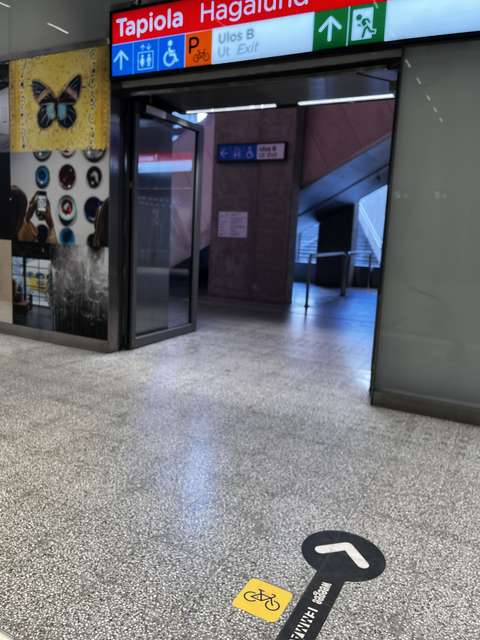
From autumn 2025, the student project focused on making bicycle parking a more understandable and discoverable part of the metro stations. The course work, which completed that autumn, saw further development in spring 2026 towards a practical pilot at Tapiola metro station. The result of this work was a location plan for signage and visual labels to guide bicyclists to the bicycle park at Tapiola station. Installation of the signage took place in May 2026.
Clear and easy-to-see signage reduces the barrier of choosing the bicycle as a part of a longer travel chain and particularly makes it easier for new users to pass through the metro stations. The Tapiola pilot is an example that can be applied at other Länsimetro stations as well.

The pilot provided valuable data on the impact of minor, cost-effective solutions on improving the passenger experience while promoting the city’s climate objectives. For the City of Espoo and the Cycle4Climate project, this student partnership is a good example of how cities, projects, educational institutions and infrastructure owners can jointly develop functional and sustainable mobility solutions.
The signage pilot at Tapiola station shows that user-first design and an active approach by the facility owner can create real improvements in the urban environment. At best, even the smallest of measures, such as clear signage for bicycle parking, support the wider transition towards a more climate-smart and smooth mobility in Espoo.
Read more on the Länsimetro website(external link, opens in a new window) (in Finnish)
