Lake-friendly gardening is good for waterways
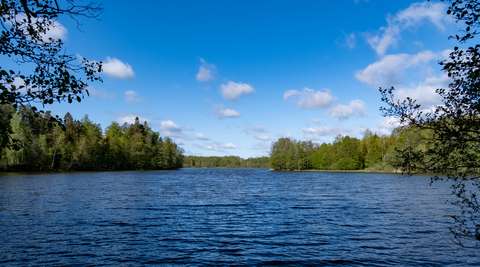
Espoo is a swimmer’s paradise, as the city has nearly a hundred lakes and ponds. Everyone’s choices affect water quality, including those made by residents and local actors. After all, substances used on land may end up in lakes and eventually in the sea.
How to care for your garden with lakes in mind
Correct fertilisation is important, as every fertiliser pellet that escapes from your garden is fast food for algae. You should also consider the choices of materials and plants used in the garden, as they affect water absorption. The longer the water stays on your plot and filters through the ground, the cleaner it will be when it ends up in a lake.
Fertilise with the right substances, methods and weather conditions
Biochar is a safe choice for fertilisation. It improves soil porosity, evens out moisture levels and binds nutrients. Lime enhances the circulation of nutrients already in the soil.
The use of phosphorus is not recommended as it causes eutrophication in lakes and causes blue-green algae blooms. Nitrogen, in turn, causes eutrophication in the Baltic Sea. If you have to use phosphorus- or nitrogen-based fertilisers, you should favour organic fertilisers such as compost or chicken manure pellets.
You should place the fertilisers in a hole dug near the plant’s roots, water it and cover it with soil. This allows the plant roots to grow towards the fertiliser, and the plant absorbs the nutrients it needs from it.
You should preferably fertilise the plants in partly cloudy weather when the soil is moist. This allows nutrients to be absorbed deep into the soil. You should avoid spreading nutrients just before predicted heavy rainfall, as heavy rain rinses the nutrients directly into ditches and, through them, into lakes.
Avoid pesticide use
As pesticides intended for insects and weeds are harmful, for example, to aquatic organisms, you should favour mechanical control methods instead of pesticides.
Mechanical control methods include weeding and fallowing, a technique that involves repeated soil cultivation to prevent weed seeds, shoots and roots from growing. Weeds can also be suppressed, for example, by covering the soil with a thick layer of leaves, branch chippings or straw, a dense fabric or an old rag rug.
Choose a wide variety of plants
Instead of just lawns, you should favour diverse, layered vegetation in your garden, including ground cover plants, flowering perennials, trees and shrubs. Plants bind water and nutrients. They also use their roots to hold the soil in place and prevent soil runoff.
Large trees and shrubs absorb more water than small plants. You should also collect rainwater for irrigation.
If your garden is located right next to a waterway, you should leave a plant-covered area near the water, as this slows down water runoff and absorbs nutrients before they are washed into waterways.
A closely mown lawn is a poor choice from a biodiversity perspective. It also does not retain water and nutrients very well. You should also especially avoid covering your yard with asphalt, as water cannot be absorbed through it at all.
Lake Lippajärvi will thank you – resident activities improve water quality
In Lake Lippajärvi, the local community association Lippajärveläiset ry has set an excellent example by taking responsibility for improving the condition of a lake important for residents. The association launched a communication campaign aimed at providing locals with information that helps them contribute to the water quality of Lake Lippajärvi.
The campaign has included distributing brochures and stickers to residents. You can attach the sticker to your mailbox to show others that you engage in lake-friendly gardening. The City of Espoo supports the campaign through the Sustainable and Nature-friendly Espoo development programme.
Lake Lippajärvi contains less water than the amount of stormwater accumulated flowing into it from the area over the year. In practice, it means that those swimming in Lake Lippajärvi are swimming in stormwater, so the activities of those living around the lake have a real impact on water quality.