Espoo’s digital experiments offer new insights into service development
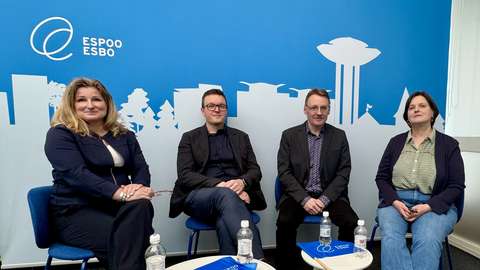
Espoo’s latest digital experiments and their results were presented at the Kokeilujen satoa event on 18 March. The experiments presented were two AI experiments, schoolchildren’s Minecraft creations related to sustainable development, and cycling weather data sensors.
At the event, experts from the City of Espoo explained how the four most recent digital experiments will shape the future of services.
“Through our experimentation programme, we have promoted the use of new technology, digitalisation of city services and introduction of new approaches. The experiments have given us valuable information on whether there is a genuine need for the solutions, how they work as part of Espoo’s service selection, and what the cost structure of AI-based solutions would be like,” Director of Digital Service Development Piia Wollstén stated in her opening remarks.
Hello Espoo AI translation experiment helps people adapt to their new hometown
The experiment will continue until the summer, allowing new residents to read and listen to HelloEspoo.fi content in different languages.
“The aim of the one-year experiment is to examine how well artificial intelligence can translate content related to city services and how useful these translations are for residents,” said Irena Bakić, Project Manager for the Trust-M project.
Weather data experiment produced local information on cycling weather
The sensors and weather stations installed in five locations provided accurate and up-to-date information on weather conditions for pedestrians, cyclists and maintenance staff. In particular, the experiment sought solutions to increase year-round bicycle commuting.
“This was the first time that weather sensors were used to provide local weather information for pedestrians and cyclists in Espoo. Our aim was to provide safer and more pleasant walking and cycling experiences, especially in changing weather conditions in autumn and winter,” explained Senior Specialist Tessa Armour, who was in charge of the experiment.
The data on temperature and road surface moisture is updated approximately once an hour on the website(external link, opens in a new window). The information was also automatically shared on the experiment’s Facebook page(external link, opens in a new window) every morning.
Read more about the experiment and its results on the Sustainable Future Districts pilot programme’s webpage.
Builders of a Sustainable Future competition increased schoolchildren’s awareness of sustainable development
The competition invited schoolchildren to plan an environmentally friendly and innovative future for Espoo. The competition took place in Minecraft, where players build and explore a 3D world made of cubes.
“The Builders of a Sustainable Future competition is a great example of how technology, when used correctly, can be a wonderful tool for learning,” said Sports Planner Kimmo Leinonen.
The competition increased schoolchildren’s awareness of themes related to sustainable development and introduced them to game education and the world of gaming.
Espoo’s intranet AI experiment offered new insights into information search
The AI assistant experiment on the city’s intranet showed how generative artificial intelligence can support the daily work of employees. The experiment compared a tailored GPT assistant, MS Copilot and the intranet search function. The testers assessed the findability of information, the clarification of instructions and the role of AI in making daily work smoother.
“AI is changing the way we work. The experiment showed that it’s not just about technology, it’s to do with processes and our organisational culture,” Senior Planning Officer Pauliina Ilvespakka stated.
The event ended with a panel discussion focusing on Espoo’s digital future.
A video of the event(external link, opens in a new window) is available on the City of Espoo YouTube channel.
Read more about the City of Espoo’s Digital Agenda: espoo.fi/digiagenda