Espoo is collaborating on developing a tool that helps identify nature values in the city
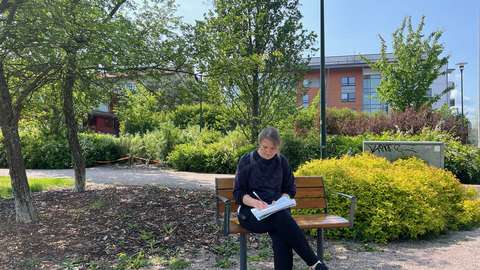
How to increase the amount of green in cities and prepare for climate change? The regional green factor tool helps see what types of habitats there are in the city and what benefits they bring – such as diversity, climate wisdom and enjoyment.
The City of Espoo participated in the VALUE project that finished at the end of 2025. The purpose of the project was to identify the value of nature and strengthen the green structure in densely built cities. At the same time, the aim was to promote preparedness for and adaptation to climate change.
– Cities are living ecosystems, not just built environments. Larger nature areas, such as central parks, are important elements. However, the nature in built environments also plays an important role in terms of biodiversity, says Specialist Planner Anna Pursiainen.
Built environment habitat types help perceive the value of urban nature
Nature produces many values for people, such as diversity, climate wisdom and wellbeing. Biodiversity encompasses the diversity of all living things. It is an essential prerequisite for life on Earth and safeguards the ability of nature to produce air, water and food.
Climate wisdom refers to nature’s features that promote the prevention of and adaptation to climate change. For example, nature serves as a carbon sink for greenhouse gas emissions. Simply spending time and physical activity in nature also improve people’s wellbeing.
There are many kinds of nature in the city as well. As part of the project, 15 different built environment habitat types were identified and defined. These include bushes, open parks and vegetation along transport routes.
– Each built environment habitat type has different ecological characteristics. They produce different values and benefits for their environment. These values include biodiversity, cooling the air, delaying storm water and opportunities for recreation,” Pursiainen explains.
The project included biodiversity researchers and leading professionals in the field. According to Pursiainen, the work to identify the value of urban nature has been a significant step towards better taking nature into account in urban planning. The accumulated knowledge and competence support the work of city planners.
The regional green factor tool helps take urban nature into account in planning
The project developed a regional green factor tool, which was piloted in Espoo.
A similar tool has previously been developed in Sweden. The tool makes it possible to make calculations on the amount and quality of biodiversity.
First, the user of the tool identifies the built environment habitat types found in the area under study. After this, it is possible to calculate what kind of benefits the green structure of the area produces. Green structure refers to green growth areas in cities, such as forests, parks, yards and street green.
– The regional green factor tool provides us with basic data for urban planning and zoning. We can see the habitat types in the area and the benefits they produce. We can also assess what habitat types are needed in the area,” Pursiainen explains.

The Espoo pilot provided lessons for planning different areas
The regional green factor was piloted in three areas in Espoo. The pilot areas were selected to be different from each other. Vaskitsanmäki is mainly a forested area. Nupurinkallio has been built sparsely, without a local detailed plan. And the centre of Leppävaara is a densely built area.
According to Pursiainen, the regional green factor could be used to determine, for example, which parts of the green structure should be developed or preserved when the planning of a sparsely built area starts. The calculations help further planning of the areas.
– Even dense areas have potential for change. Nature values can be added through good planning. For example, green roofs or plantings can be used to support the green structure. The main goal would be to ensure that the area has the greatest possible biodiversity,” Pursiainen explains.
Diverse nature may be found in unexpected places
Sometimes, the regional green factor may help notice the unexpected positive effects that a habitat type provides. Pursiainen gives an example from the centre of Leppävaara: a good ruderal community has developed in place of Metropolia University of Applied Sciences which was demolished in the area.
Ruderate is one of the built environment habitat types. It refers to herbaceous vegetation formed on soil shaped by human activity. It develops on a wasteland or other land shaped by human activity. The vegetation develops from the soil’s own seed bank as well as from the seeds introduced to the area by animals and wind.
– The Leppävaara ruderate blooms like a meadow. It is rich in species and brings biodiversity benefits to the area. You might not immediately think about that. Utilising the regional green factor, we can identify the value of urban nature even in surprising places that we often do not appreciate,” Pursiainen explains.

The lessons learned in the project will help implement the Nature-wise Espoo roadmap
Pursiainen is excited about the lessons learned in the project. They will support the implementation of the Nature-wise Espoo roadmap. Espoo’s stated goal is to safeguard and increase biodiversity as the city grows.
Espoo wants to ensure that the regional green factor tool is deployed to aid the work of urban planners.
– We have trained both local detailed planning and master planning employees on the use of the tool. As municipalities accumulate data on built environment habitat types, it will benefit the promotion of biodiversity on a national level, Pursiainen says.
VALUE – Valuation and strengthening of urban green spaces in landscape planning in cities
The project VALUE – Valuation and strengthening of of urban green spaces in landscape planning in cities (10/2023–12/2025) strengthens the green structure and identified values it produces in densely built cities in order to promote adaptation to climate change. The project is coordinated by the City of Helsinki. The project partners are Aalto University, the City of Espoo, the City of Vantaa and the Green Building Council Finland. The project is co-financed by the European Union.
