Residents’ views strengthened the focus of the Wellbeing Plan – the Voxit participation platform inspired residents’ participation
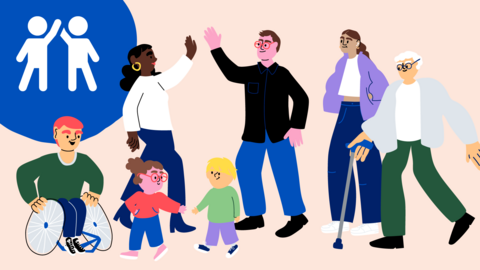
In autumn 2025, the City of Espoo used the digital Voxit participation platform for the first time in the preparation of the Wellbeing Plan. The platform enabled a new kind of anonymous, low-threshold way to participate in the discussion about the city’s development work.
In September, we organised two discussions: one for people with functional difficulties or reduced mobility, and one for children and young people. The results of the discussions will be used both in the Wellbeing Plan and in the development of services in different city units.
What did the participants want to discuss? What kinds of opinion groups were formed on the platform? Where and how did participation have an impact?
You can read more detailed an analysis impacts of participation in the results report available on the Voxit home page under the section “Themes, dates and results of Voxit discussions”.
Accessibility, exercise for special groups and special needs for parking emerged as the most important themes for people with functional difficulties or reduced mobility
In the discussion for people with functional difficulties or reduced mobility, the most statements added were related to accessibility, exercise opportunities for special groups, and special needs for parking.
Based on their responses, the participants were divided into two groups. There were significant differences between the groups in terms of their experiences of equality and accessibility.
One group had accumulated many factors that undermined their wellbeing, such as loneliness, experiences of discrimination in city services, and the feeling of not being heard or seen.
According to the results of the discussion, the participants considered it important that city employees understand how the lack of accessibility affects everyday life and that accessibility and agency should be considered broadly, as not all limitations are visible on the outside.
Mental wellbeing, expressing different views, values, equality, and non-discrimination were topics that resonated with young people
In the discussion for children and young people, the most statements added were related to the themes of mental well-being, different values and views, and equality and non-discrimination.
The analysis revealed two distinct groups: young people who were doing well on average, and young people who were facing many factors that undermined their wellbeing, participation, and safety.
The latter group also experienced more insecurity: at home, at school, in town, in the company of other young people, and online. In this group, almost half of those who expressed an opinion felt that they did not receive help with their mental health challenges.
More than half of all participants would like to reduce their phone use. This is in line with the School Health Promotion Study, according to which 33–43% of young people in Espoo had tried to reduce their internet use without success.
How are the results of participation included in the Wellbeing Plan and city services?
Discussions with residents reinforced the idea that the priorities outlined in the Wellbeing Plan – strengthening mental wellbeing and safety and reducing loneliness – are important and current topics and therefore a good choice also from the residents' perspective.
The importance of accessibility issues that emerged in the discussion for people with functional difficulties or reduced mobility has been widely communicated within the city. As a result of the Voxit discussion, an accessibility-related indicator will be included in the Wellbeing Plan.
The Wellbeing Plan will be implemented through the basic work of the city’s units. Based on the themes raised by the residents, proposals for measures have been drafted for the units for the coming council term.
These include, for example, friendship and conflict resolution skills, increasing club activities, increasing the presence of safe adults, addressing social media phenomena that oppose equality, taking into account the needs of the people with hearing impairments in the design of facilities, increasing meeting places for residents, strengthening accessibility work, and investing in attitudinal accessibility.
The Voxit discussions have attracted widespread interest and praise within the city. The results have been widely communicated within the city, and matters important to residents have been brought to the attention of various units and sectors so that they can be utilised more extensively in development.
A new way of listening to residents – to be continued
The Voxit platform was generally considered an easy way to participate. There were 133 participants in the discussion for people with functional difficulties or reduced mobility, 75% of whom felt that it was “kind of nice way” to participate.
There were 598 participants in the discussion for children and young people, 59% of whom felt that it was a “nice way” to participate.
As there were different response options in the discussions, the results cannot be fully compared. Would the number of positive responses in the discussion for children and young people have been higher if it, too, had used the phrase “kind of nice way”?
On the other hand, the large number of participants in the children and young people’s discussion – a total of 28,842 votes – and the fact that each participant gave an average of more than 48 votes, shows that Voxit motivates young people to participate.
Thank you to everyone who participated!
The third discussion addresses the city’s grants for organisations
Voxit discussions are part of the EsVoxit project, co-funded by Sitra, in which Espoo will organise at least five discussions on various themes. Next, residents can participate in the decision-making in the Sports and Wellbeing Committee.
The topic of the third discussion is the distribution of organisational grants for wellbeing, health, and inclusion. We always receive more applications that meet the criteria than we have funds available.
We want to hear from residents to support challenging decision-making and find out their views on how grant funds should be allocated or prioritised. More information on the third discussion will soon be updated on the project website.
The first experiences show that Voxit discussions make it possible to reach diverse resident groups and obtain information on matters that are important to residents.
The platform also gives us access to issues that require additional attention and further processing. We did not reach residents with functional difficulties or reduced mobility as well as we would have liked, while there was a large number of young people who participated.
In future discussions, we will perhaps learn more about how to encourage residents to participate – because everyone's voice is important.