Espoo has 12 nationally significant archaeological sites
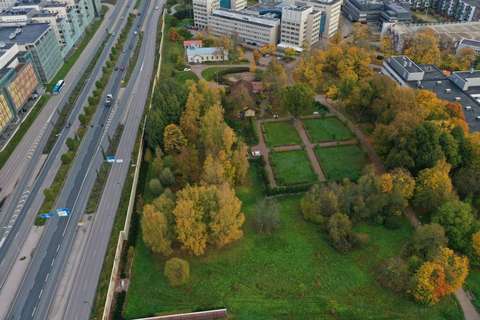
The Bemböle mill site from the 18th century, Leppävaara’s seasonal camp related to seal hunting in the Stone Age, Laaksolahti’s limestone quarry from the 15th century, Sperrings’ Early Comb Ceramic settlement and Tapiola’s barrack area from the First World War. These are some of the 12 nationally significant archaeological sites (VARK sites) in Espoo, which differ greatly from one another and date back to different periods.
The VARK inventory carried out by the Finnish Heritage Agency comprises a total of 1,391 sites in mainland Finland, 12 of which are located in Espoo. The inventory approved by the Government in November 2024 will enter into force on 1 March 2025. The inventory was carried out in cooperation with the regional museums in charge of cultural environment tasks and Metsähallitus during 2018–2024. The regional museum in charge of cultural environment tasks in Espoo is KAMU Espoo City Museum. The steering group also included the Association of Local Authorities, the University of Helsinki, the Finnish Archaeological Society, the Ministry of Education and Culture and the Ministry of the Environment.
VARK sites reflect the archaeological cultural heritage
The sites have been selected on the basis of their archaeological or cultural and historical significance, i.e. how well they depict the phenomena, events and different aspects of life associated with their time period. Together, the sites provide an impression of Finnish archaeological cultural heritage that is comprehensive both historically and regionally as well as in terms of monument types. The oldest sites date back to the end of the Ice Age more than 10,000 years ago and the youngest to the early decades of the last century.
The sites in Espoo also reflect the layeredness of time and remind us of the early history of the area. It is therefore worth familiarising yourself with the sites and, at the same time, deepening your knowledge of your home region and Espoo as a whole.
“The cultural environment and layeredness of time contribute to the identity of the area. Knowledge of the history and values of the cultural environment of your residential area promotes familiarity with the area, appreciation of it and rootedness and attachment to it,” says Paula Kangasperko, Architect at the Espoo City Planning Centre.
There are around 60,000 archaeological sites in Finland. A total of 4,785 of the sites were assessed in the recent VARK inventory, and 1,391 of them were considered to be of national significance. KAMU Espoo City Museum was involved in the assessment of the many sites in Espoo and proposed the most significant ones, 12 of which were finally selected as VARK sites.
VARK sites must be taken into account in land use planning
All antiquities are protected under the Protection of Antiquities Act, and the VARK status does not add any new direct legal effects to it. Many of today’s VARK sites are located in forests. Land use is still currently allowed so, for example, fields may be cultivated and forests managed, but any antiquities may not be damaged or covered.
Since the Government has approved the VARK inventory as an inventory referred to in the national land use guidelines based on the Land Use and Building Act, the planning solutions must ensure that the national land use guidelines are met. In addition to the Protection of Antiquities Act, it must be taken into account in the VARK sites that the values defined for them must not be compromised when land use plans are implemented.
As the city is growing and developing, new construction is being carried out.
“The VARK sites are treated more strictly in planning than other areas, so if there are plans for construction in such an area, KAMU Espoo City Museum must be contacted right at the start of the planning process or other measures so that it can take a position on the matter. The values of the cultural environment are one of the many factors to be taken into account in land use planning,” says Kangasperko.
The cultural environment refers to the natural environment shaped by people. It includes archaeological heritage, built environments and cultural landscapes.
Kangasperko works in the Master Plan Unit, where the Espoo Master Plan 2060 is currently being prepared. The VARK sites were not yet included in the draft stage of the plan as they had not yet been selected.
“In the next stage, which is the proposal stage, the VARK sites will be taken into account in some way. One option would be to present them, for example, on an appendix map of the cultural environment,” explains Kangasperko.
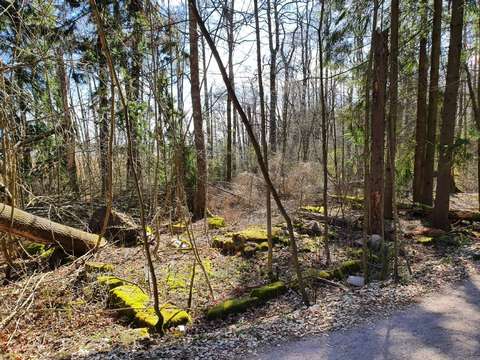
Gems of Espoo, 12 VARK sites
- Alberga, Kersantinpuisto. The site of the old Alberga manor house from the 1720s and 1730s and the manor gardens built from the 1750s onwards, with large garden terraces. At least the building foundations and furnace bases of the manor house, which was demolished in the 19th century, have been preserved underground. The garden terraces are visible above ground. There are wetlands in the vicinity of the garden, which are the remains of crucian carp ponds. The site is still managed as a garden-like park. The new Alberga manor is located on the other side of the present Ring I.
- The Bemböle mill site consists of the grey-stone ruins of two water mills and parts of stone dam and flume structures. A few small ruddled cottages, including the miller’s cottage, still stand along the banks of the riverbed, in addition to the old roads and building foundations. There used to be a mill on the site from at least the early 1700s until 1929, when the last mill burnt down. The site is very well preserved and provides a good picture of grain processing in a rural village of a bygone age.
- Bergdal is a well-preserved Stone and Early Metal Age settlement. Some of the finds from the site include Morby pottery dating from the end of the Bronze Age to the beginning of the Iron Age. Finds from the Mesolithic period have also been made at the site.
- Bredvik, Bruksstranden is a rare archaeological site of its type, reflecting the industrialisation of the 18th and 19th centuries. The establishment of a brick and faience factory in the 18th century is linked to the construction of the Suomenlinna fortress. Nowadays, the building foundations and the furnace base, clay quarries, heaps of brick waste and an 18th-century loading dock are visible on the site.
- The Karhusalmi VARK site includes Karhusaari and Karhusalmi (Hanasund). The site is a complex consisting of an artillery battery and an underwater barrier from the Crimean War (1853–1856). Karhusaari is the westernmost artillery battery of the Suomenlinna fortress. The site contains the remains of the battery and a rifle station and represents the armament for naval warfare and landings. The Karhusalmi (Hanasund) barrier is an underwater barrier that is well preserved. The stone-filled log structure is 62 metres long, 4.5 metres wide and 1–1.5 metres high.
- The Laaksolahti–Dalsvik (Strandbacka) quarry is a historic limestone quarry. There used to be a lime kiln nearby, but it has not been located in the terrain. The quarry may date back to the end of the 15th century, around the time of the construction of the Espoo church, and the latest records of quarrying date back to 1904. The quarry is a rare type of site in the Metropolitan Area, with a very long period of operation.
The Mankby VARK site consists of three locations: Backisåker 1, Finns and Mankby (Mankki). Together with a medieval village plot and Stone Age settlements, they form a settlement-historical whole.
Backisåker 1 is a settlement of the Kiukainen culture dating to the end of the Stone Age and partly located on the same site as the deserted medieval village of Mankby. The Stone Age settlement indicates that the site was well suited for settlement in different periods.
Finns is also a settlement-historical whole that consists of a medieval village plot and Stone Age settlements. An abundance of finds have been made from this Neolithic or Ceramic Stone Age settlement, dating from different phases and located at different heights along the shore.
Mankby (Mankki) is an exceptionally well-preserved, extensively studied and early deserted medieval village site. In 1556, the inhabitants of this fairly large medieval village were forced to give way to the Espoo King’s Manor, which was established on the land of the village. The deserted village site was rediscovered as recently as 2004. The site is located in a herb-rich forest and has been well preserved, with several furnace bases, foundations and floor stones visible above ground. The site is the most extensively studied (2007–2013) medieval village site in Finland, and the most published in terms of research results. There is still much more to be studied at the site.
- Sperrings is a research historically significant Early Neolithic or Early Ceramic Stone Age settlement. Some of the oldest ceramics from southern Finland, more commonly known as Early Comb Ceramics and initially referred to as Sperrings ceramics, have been found there. In addition to ceramics, the site is rich in finds of stoneware and fragments of clay idols. The site is located partly in a field and partly in a farmyard. The site was studied by excavation in the 1920s. Parts of the site have been damaged by later land use, but most of it is presumably well preserved.
- Base XXIX:3 (Pohjois-Leppävaara) is part of the well-preserved Helsinki land fortress and part of the Base XXIX complex. The Leppävaara base was the scene of battles during the invasion of Helsinki in April 1918. It is a defence station of the Helsinki land fortress from the First World War, built between 1915 and 1918. The site contains battle and communication trenches dug into the rock and excavated, machine gun and observation stations made of stone and concrete, a floodlight station, an unfinished cave and shelters built of both concrete and logs.
- Base XXXIII:barrack area (Tapiola) is a barrack area of Base XXXIII of the Helsinki land fortress from the First World War. It was most likely built between 1915 and 1918. The buildings on the site have been destroyed, and stone or concrete structures remain in the terrain.
- Sports park 2 is located in Leppävaara. It is a significant and dense seasonal camp related to seal hunting in the Stone Age, dating from the Neolithic or Ceramic Stone Age (4200–3700 BCE). Twenty-two hearth pits have been studied at the site, probably related to the production of seal blubber, i.e. train oil. The camp has been located by the sea in a sand pocket between cliffs. The finds also include waste from the making of stoneware and a few pieces of earthenware.
- Västerängen is also located in Leppävaara. Based on the structures, there are three burial mounds dating to the Bronze Age or early Iron Age, which have been slightly reshaped and excavated during the historical time. However, the site is well preserved. The mounds are large, ranging from 15 x 7 m to about 10 m in diameter. The height of the mounds is about one metre.
You can find all of Espoo’s 12 VARK sites and their map locations here(external link, opens in a new window) (in Finnish).
You can read more about the VARK sites(external link, opens in a new window) on the website of the Finnish Heritage Agency.
Sources: www.museovirasto.fi and interview by Architect Paula Kangasperko