Construction in Espoo uses nearly one fifth of all concrete in Finland
Both construction and demolition are prevalent in rapidly growing Espoo. In recent years, both the number of granted building permits and the amount of new building and housing constructions have been at a record high. Sustainable growth requires a shift to circular economy in construction, prudent use of natural resources and management of environmental impacts. In order to have various material flows circulate carbon-neutrally and in a way which creates profitable business, information is required on reusable construction materials, such as concrete and glass, as well as their volume, properties and location.
One of the goals of a survey ordered from Spolia Design Oy in the spring was to obtain a comprehensive picture of the material flows of concrete and glass in construction in Espoo. The survey was based on data collected from existing statistics, urban planning and the archives of various actors in the construction industry. Calculated with data from 2021, construction in Espoo used 560,000 tonnes of concrete, excluding yard paving and using a ready-mix concrete estimate of 10%. Espoo accounts for 15–20 % of concrete used in Finland. According to the survey, the proportion of recycled materials in concrete structures is approximately 28,000 tonnes or 5% of all construction in Espoo. In a concrete structure, recycled material is mostly found in the metal reinforcement bars.
For glass, the number was estimated to be 3,000 tonnes. Glass is a highly recyclable material and with better sorting processes, it would even be possible to turn glass into profit. Recycled material is currently utilised efficiently as both foam glass (up to 98% recycled glass) and glass wool (nearly 70% recycled glass). The biggest recycling potential lies in the use of new office glass structures and glass wall solutions. For example, Spolia Design created high-quality office facilities for Nordic Bioproducts Group in Espoo’s Otaniemi in 2022. The glass wall structure, approximately 100 m2 in size, was built using glass walls from a demolished office in Vantaa. Disassembled glass structures that were in good condition were complemented by new wooden framework.
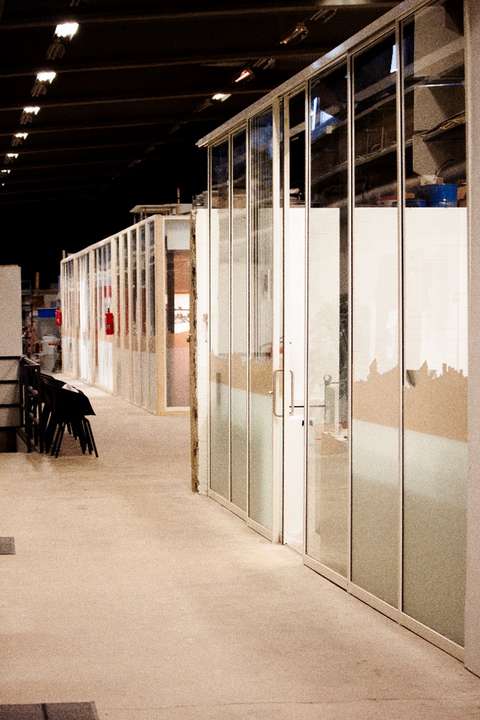
“There is a lot of room for improvement when it comes to better recycling of construction materials. At the moment, circular economy in construction is mostly about recycling materials, particularly metals. Buildings to be demolished are not seen as a reserve of recyclable structural elements,” says Mikko Piitulainen from Spolia Design Oy.
The transition from linear to circular economy will drastically change the operating culture in the construction and property sector as well as business models. Utilisation of circular economy in construction opens up new avenues for business. In addition to data management, we need new actors for research, surveys, removal of parts in full, factory refurbishment and providing storage.
“We also need strong and stable pioneers who can lead the way towards more sustainable and responsible construction. Cities, for one, can act as pioneers through land use and other construction. We are far behind on all targets and there needs to be a major shift in attitude in all parties to rectify the situation,” Mikko Piitulainen adds.
The City of Espoo aims to be carbon neutral by 2030. In order to achieve this goal, swift and significant actions are required also in construction. For instance, removal of structural elements in full and reusing them creates 8–15 times less carbon emissions than using newly produced materials. Reused structural elements currently count as emission-free which should encourage their use. For circular economy to be most efficient, the goal should be to only build from scratch when necessary, reduce demolition with smart land use planning and being able to change the purpose of existing buildings easily.
“A new construction law will take things in the right direction. The law guides towards low-carbon construction and reinforces circular economy,” says Reetta Jänis from the City of Espoo.
“Moving forward, buildings should be designed to be long-lived and adjustable in terms of purpose in addition to, for example, determining the materials used and released. I am waiting to see pioneer-level goals in the upcoming decrees on climate declaration of buildings, material specification and carbon footprint limit values,” Jänis says hopefully.
Read the report (in Finnish):
Downloadable files
- Betonin ja lasin materiaalivirrat Espoossa.pdfFile is only available in Finnish
The Material Flows of Concrete and Glass in Espoo survey was conducted as part of the Solution Path to Sustainable Growth Ecosystems (RAKKE) project which has been funded by the Uusimaa Sustainable Growth and Vitality Support (UKKE) funding.