Urban activism is well worth the effort – Matinfest celebration was bigger than ever
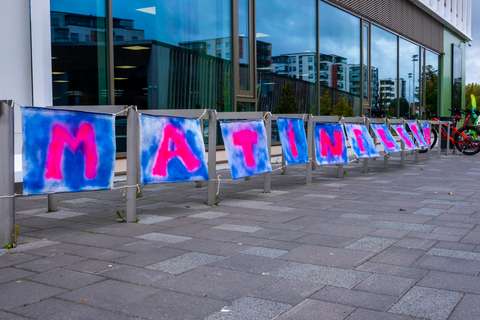
Matinfest shows that organising a neighbourhood festival does not require any superpowers, but it can generate general good that reaches surprisingly far.
Neighbourhood festivals bring neighbours together
Matinfest in Matinkylä is one of the many neighbourhood festivals held in Espoo. Every neighbourhood probably has a festival of its own a year, if not even more than one. For instance, Matinkylä also celebrates the Matinraitti village carnival in the spring. Laajalahti has the Laajalahti Days, Leppävaara the street festival Raittikarnevaalit, Tuomarila the Village Days, Nupurinjärvi the Beach Party, Olari the Olarin Lystit festival and so on.
Almost every one of us has visited a neighbourhood festival at some point as, coming closest to the residents, they are among the easiest urban events to visit. Neighbourhood festivals bring a festive atmosphere to everyday neighbourhoods and offer low-threshold opportunities to get to know your neighbours. These events can be about almost anything the residents want. And you know what – that’s why they are also one of the most rewarding events to organise!
The history of Matinfest is long and eventful. This year, thanks to the renewed concept, the assembly hall rewarded the participants with even more heartfelt atmosphere than before. Matinfest was held on Saturday 19 September 2026 at Matinkylän lukio upper secondary school. This time, the programme was based even more on involving local actors and presenting the diverse groups and cultures in Matinkylä. The main organisers of the event were the residents’ association Matinkylä-Seura and the Olari Parish.

Ordinary people behind it all
The organisers of Matinfest are active long-term members in various organisations, something any one of us can become. Even though on the day of the event they are mostly feeling anxious expectation, they discuss organising events as if it were the most natural thing in the world.
“For me, it is a matter of honour to organise joint gatherings for the residents of Matinkylä. There would be no sense in life otherwise. I want to make life good and beautiful for everyone,” says one of the main organisers of this year’s event, Marja Koskenalho, active long-time member and current chair of Matinkylä-Seura.
“In my opinion, a city is at its best when we build it together with different people. That’s why I want to make my contribution to putting these groups together,” says Sirkka Ruikkala, an urban activist with many roles who has been involved since the very first Matinfest.

Both Koskenalho and Ruikkala have built exceptionally long lists of merits for themselves in the field of urban events, but they also had to start from somewhere. And even as accomplished as they are, they wouldn’t be able do it alone.
Matinfest was born when two organisations, the Asukastalo Kylämaja (now the Naapuruustalo Matinkylä) and the Kipinöitä! project of the Service Foundation for People with an Intellectual Disability, had a shared vision of a joint urban event that brings people and actors in the area together. “Back then, we, who were employed in them at the time, sent emails around and invited other locals to join us. A total of 10 people came to the first meeting – which was not much. But when the next one attracted 20 participants, and the one after that 30, we were no longer worried,” Ruikkala recalls.
“This spring, I was again worried whether anyone would be willing to join us in organising the event. But usually, you wouldn't need to worry. You will always find volunteers and get other kind of help if you just ask. Someone just must have the courage to take the initiative and ask,” Koskenalho says.

Caring can reach surprisingly far
It is difficult to summarise the history of Matinfest, as its offshoots can be found in many directions. It appears that, at least when it comes to this particular neighbourhood festival, it is impossible to separate it from the rest of the developments and communality taking place in Espoo.
The first Matinfest in 2014 was based on the idea of decorating the then Matinkylä shopping centre. The aim was to clean up and adorn the stuffy and somewhat scary building together with street artists. When the project was completed, there was to be a party. The cooperation between active long-term members of organisations, artists and the city in the field of graffiti ended up generating a whole bunch of new initiatives, which has since then given rise to such projects as Matinkylä Art Tunnels and the opening of legal graffiti walls around Espoo.
“It’s always worthwhile to start working on your own idea, no matter how small, as over the years it may lead to something that is much bigger than you,” Ruikkala says.
The fact that Matinfest was this year organised for the first time at Matinkylän lukio upper secondary school also indicates a broader movement behind the scenes of urban development. The city wants to support the active involvement of its residents in an increasingly concrete manner, which is why efforts have been made in recent years to increase the use of city facilities for civil society activities. Offering Matinkylän lukio upper secondary school as the venue for Matinfest was one of the first situations where the City of Espoo’s new policy on the use of facilities came into action as hoped, lightening the burden of the event organisers.
“Operating in the facilities of the upper secondary school enabled us to act in peace and gave us the opportunity to organise the event exactly the way we wanted. This warm-hearted event would not have been possible without the city having renewed its policies,” says Johanna Harjunkoski from the Olari Parish, one of the main organisers of this year’s event.
Do you have an idea that has been waiting to be implemented, and what it is like?
