Anti-harassment contact persons help students in all upper secondary schools in Espoo
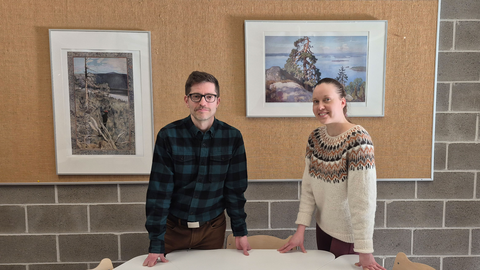
The upper secondary schools in Espoo are aiming to create safe and inclusive learning environments. From the start of the academic year 2025–2026, each Finnish-language upper secondary school in Espoo has had two trained anti-harassment contact persons supporting students, and the Swedish-speaking Mattlidens gymnasium has had one. The anti-harassment contact persons are support persons who students can get in touch with if they’ve experienced harassment from another student or staff.
The idea for training anti-harassment contact persons started in spring 2024: “At the Rector’s Seminar, we had the Diversity Trainer Kasper Kivistö talking about encounters with LGBTQI+ youth, which is when the principals of the upper secondary schools in Espoo started thinking about how we could better support young LGBTQI+ people at our schools,’ says Elina Oja, assistant principal at the Etelä-Tapiolan lukio upper secondary school and a member of the principals’ Well-being and Safety working group.
In the autumn of the same year, the City Council discussed the initiative “Getting to school safe is every student’s right: encounters and well-being of LGBTQI+ youth”. The Youth Council supported the initiative, emphasising how it would benefit everyone in the school community. This, in its part, contributed to the idea about training anti-harassment contact persons for the upper secondary schools in Espoo. The Well-being and Safety working group of principals of upper secondary schools started preparing the idea and figuring out what training was available for the initiative.
The training took place in February and September 2025. The first training was a remote session organised by Allianssi on the theme “Activities of anti-harassment contact persons in youth organisations”; the second session, which was led by the artist and researcher Susi Nousiainen, was organised as contact training. Nousiainen has been training anti-harassment contact persons in different organisations and communities since 2020. ‘One thing the training helped with was identifying when harassment should become a police matter and too big to handle on the upper secondary school level,’ says Mikko Saxberg, study and careers adviser and anti-harassment contact person at Etelä-Tapiolan lukio upper secondary school.
Elina Oja says that the anti-harassment contact persons are part of the structural equality and safety work in upper secondary schools. ‘This is not just about resolving individual situations, but more than anything, this is about having an appointed, visible and easy-to-approach adult at the school who is available to help with harassment, discrimination, or inappropriate treatment.
Their job is to listen, support and refer people elsewhere and, if it’s necessary, start the appropriate process together with management and student welfare. Confidentiality, sensitivity, and clear operating models are key in this work,’ Oja explains.

From principles of a safer space to anti-harassment activities
The anti-harassment contact persons at Etelä-Tapiolan lukio upper secondary school are the study and careers adviser Mikko Saxberg and the physical and health education teacher Karoliina Mäkäräinen. Before the anti-harassment activities started, the student union board had already prepared the principles of a safer space for the upper secondary school. The school’s communal well-being group has members who have already dealt with e.g. bullying cases and it led discussions about who would be a good candidate for the anti-harassment contact person training. ‘I’ve always had an interest in equality issues, so I wanted to do it,’ Mikko Saxberg says. Both Mikko and Karoliina are the kinds of people who make it easy for students to approach them. The goal is to help students talk about even more difficult topics with them.
Saxberg explains that their upper secondary school is one of many that has become more heterogeneous in recent years - in other words, more and more diverse. The upper secondary school has speakers of over 40 different mother tongues, and hearing impairments and physical disabilities are considered in teaching. Karoliina says that occasionally they hear inappropriate language about minorities in the school’s daily life, and this is addressed and discussed. There has been a lot of talk about good communal spirit at the Etelä-Tapiolan lukio upper secondary school. However, Saxberg reminds that this takes constant work. Two anti-harassment contact persons can’t change the community: getting rid of inappropriate behaviour takes cooperation from the whole staff. Mikko Saxberg and Karoliina Mäkäräinen see that in Espoo, there is still a lack of a shared operating model on addressing harassment.
First-year students get information on the team building day
Last autumn, the principles of a safer space were discussed with the first-year students at the Etelä-Tapiolan lukio upper secondary school on their team building day. Representatives of the student union board, who had been involved with drafting the principles, were also present at the event. All new students signed the principles. The anti-harassment contact persons and their work were also introduced during the same event. Older class groups can find information about the anti-harassment contact persons on the school’s website and in group guidance sessions.
Etelä-Tapiolan lukio upper secondary school is also planning to put up a Google Form for students to report harassment. Posters with a QR code to the form will be hung up on the school walls. The reports can be submitted anonymously, but it is important to find the people involved to talk about what happened. That is why the anti-harassment contact persons hope that students will come to them directly to talk about harassment. ‘Even in these cases, we always operate with the “innocent until proven guilty” principle, meaning that we will talk to all parties involved when resolving the case. Whatever sanctions come from that are decided by the management,’ Mikko says. So far, the anti-harassment contact persons have handled a couple of cases.
If a student encounters harassment, inappropriate treatment or discrimination, they can get in touch with their upper secondary school’s anti-harassment contact person at a low threshold. The anti-harassment contact person listens, supports, and helps the student take the next steps. The most important thing is that no one feels alone in the situation.
From the perspective of Espoo’s partnership with Helsinki Pride, the anti-harassment contact person activities are a concrete way to show that equality is part of everyday practices. A safe school comes from structures, but most of all it comes from actions and encounters. It is important that students know that they are not alone with these issues.
In Espoo, a variety of staff representatives act as anti-harassment contact persons in upper secondary schools:
Assistant principals 4
Study and careers advisers 2
Special needs teachers 2
Health education teachers 4
Religion or world view teachers 4
History teachers 3
Finnish language teachers 1
Community instructors 1