Are you familiar with the Elderly Council? It is a legal advocacy group that supports the city’s decision-makers and the inclusion of older people
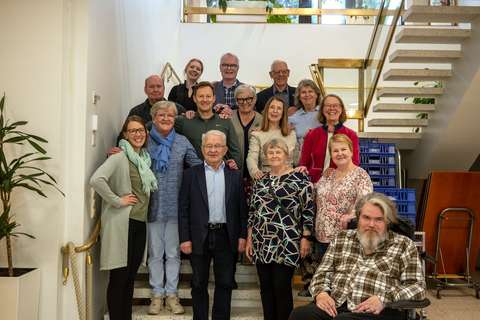
The Elderly Council is an official platform for its members to advocate for the interests of older people. The council helps the city to work for the best interests of the residents.
Influence through networks and leverage
Do you ever feel that you can’t find the tools to promote your goals? Do you feel sorry for yourself when you feel like you haven’t been able to everything to promote your cause? Well, the members of the Elderly Council certainly don’t.
“Working through the Elderly Council allows me to speak out at the circles of power. It makes me feel like I at least tried,” says Heikki Lenkkeri, representative of Eläkeläiset ry at the Elderly Council.
“The Elderly Council lets me say what my group needs,” according to Susanna Lehtovaara from the Jade Community, an association for older people with a migrant background.
"In the council, I get to be a part of creating the solution,” says Seppo Peltonen, representative of the National Coalition Party.
The Elderly Council is the voice of Espoo’s older population in the decision-making and service development of the city. Its job is to advocate for the interests of older people in matters that impact their lives. The council is asked to comment on the principles of association grants and various action plans, among other similar matters.
In addition to official statements and initiatives, members of the Elderly Council find that membership also provides other, less direct avenues of influence. Membership in the council is an entryway to a network of other pensioner associations and city personnel. It is easier to understand upcoming changes when you can ask a person directly instead of just reading various documents.
Wealth of success over the years

The determined advocacy of the council has, over the years, resulted in various significant victories for older people. The Elderly Council may not hold any official decision-making power or veto, but time after time, its refined arguments and timely highlighting of issues have produced results.
Olli Männikkö, chair of the National Association of Seniors, has chosen to highlight the Sports Wristband as the finest success in the council’s efforts. The Sports Wristband allows Espoo residents over 68 to use the city's swimming halls, gyms, guided exercise sessions and the scheduled archipelago boat services for free. It also includes a discount for bringing a friend.
The transfer of social welfare and health services from the cities to wellbeing services counties introduced various changes for older people, in which the Elderly Council has been the determined advocate for the elderly. Erja Tikka, from the Centre Party, highlights the council's role in the continuing grants to older people’s associations. There was a real possibility for older people’s associations to be completely left by the wayside in the overhaul of the city’s grants, but it was mostly the Elderly Council’s advocacy that secured the eligibility of these associations in Espoo for grants to promote health, wellbeing and social inclusion.
The transition to the wellbeing services counties also came with another hurdle to clear: the associations meeting spaces. This continues to be an active theme in the council's advocacy. In fact, it has been their declarations that have brought about an extensive facility survey and wide-ranging updates to facility criteria. As a recent example, and before long-term solutions are in place, the council has already succeeded in negotiating with the city on opening the City Council Building café for pensioner associations that lost their old facilities when the Espoon keskus service centre closed for renovations.

Vital support for office holders
Without understating the above achievements, it bears remembering that making a stand can indeed change things. A city exists for its residents and communities. It is, in fact, incredibly valuable to us that decision-makers have such an active and organised group of people to draw upon. Indeed, city experts often find it a relief for there to be someone they can ask for advice and opinions in the preparation stages.
The Elderly Council is the seat of not just representatives from the political parties and Espoo-based pensioner associations, but members from the city’s other sectors as well. The council’s meetings are a place for them, too, to ask questions and think out loud. This new understanding, gained through dialogue, is usable in our work in a variety of ways. For instance, an accessibility specialist with a permanent seat can gain more information about urban accessibility issues for the elderly. In addition to the permanent members, the city personnel are always included in the meetings when they have a matter to bring up.
“The Elderly Council often provides useful comments not just for the elderly themselves, but for many other matters as well. The wisdom of age leads them to think from a long-term perspective that not every mind is even capable of,” according to Maria Tiilikkala, the city liaison for the Elderly Council.
“At best, their perspective can introduce all-new insights, which makes it all the more valuable.”
