Gillermossen to become Espoo's first ecological restoration site – Espoo improves the state of nature by restoring forests, mires and small water bodies
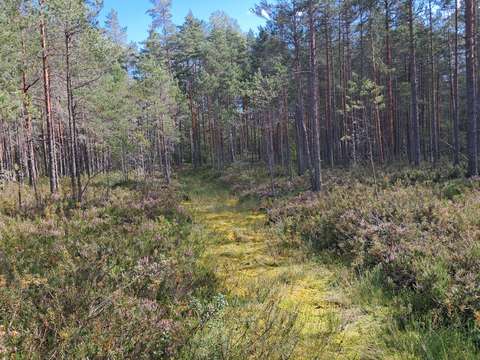
Gillermossen is the first of several sites where the City of Espoo will restore forests, mires and small water bodies. The city is taking concrete action to enhance biodiversity and combat biodiversity loss. Restoration work on the mire and watercourse in the Gillermossen nature reserve will begin at the end of October.
“Ecological restoration is an effective way to improve the state of nature in areas where human activity has altered or degraded the natural environment. The main goal is to slow biodiversity loss”, says environmental specialist Suvi Kolu from the City of Espoo’s Environmental Protection Unit.
The restoration work is part of the Nature-wise Espoo and Espoo’s Action Plan for Protecting Biodiversity.
“Ecological restoration helps preserve biodiversity as the city grows. By restoring natural habitats, we safeguard the benefits that nature provides to people, such as clean water, carbon sequestration and recreation. Residents therefore also benefit from ecological restoration”, says City Manager Kai Mykkänen.
Espoo’s first ecological restoration measures will be carried out in Gillermossen in Velskola
The Gillermossen nature reserve in Velskola was selected as Espoo’s first ecological restoration site. Ditches in the mire will be dammed and filled in to retain water. As the water level rises, peat decomposition stops, mire vegetation recovers and the mire begins to absorb carbon again. Although trees will be removed from overgrown areas of the mire, the felled trees will be left in place to store carbon. Low dams and flow deflectors, which are structures that direct the flow of water, will be installed in the watercourse to restore its natural meandering course.
“For a few years after the restoration work, parts of the mire will look disturbed, but before long, peat mosses will spread and cover the traces”, says Suvi Kolu.
Espoo is purchasing the restoration work at Gillermossen from Hiilipörssi Oy. The City of Espoo’s Environmental Protection will oversee the work.
Espoo to restore more natural sites in the future
Over the past two years, Espoo has identified a total of 25 sites for ecological restoration, covering nearly 600 hectares. The city will provide updates on the next sites as plans progress.
Ecological restoration involves measures to return natural areas degraded by human activity as close as possible to their natural state. Restoration improves the condition of natural habitats and habitats for species and slows biodiversity loss. The measures always depend on the site:
- In forests, restoration measures most often involve increasing the diversity of tree species and age structure. For example, small clearings are created in forests, and the amount of deadwood is increased by felling and damaging trees.
- In mires, the most important measure is to restore the natural water balance by blocking and damming ditches to prevent water from draining away. This allows the groundwater level to rise and mire vegetation to recover.
- Restoring small water bodies usually involves removing man-made structures and restoring the natural meandering of watercourses, as well as stones, gravel and deadwood.
The restoration sites will be entered in the Ecological Compensation Register and earmarked for the City of Espoo. However, the sites are not selected based on their potential for ecological compensation. Instead, the primary aim of the restoration measures is to slow biodiversity loss.
Further information: City of Espoo’s Environmental Protection Unit, environmental specialist Suvi Kolu, suvi.kolu@espoo.fi
Read more: Frequently asked questions about ecological restoration in Espoo