An assessment of traffic noise to be carried out in Espoo
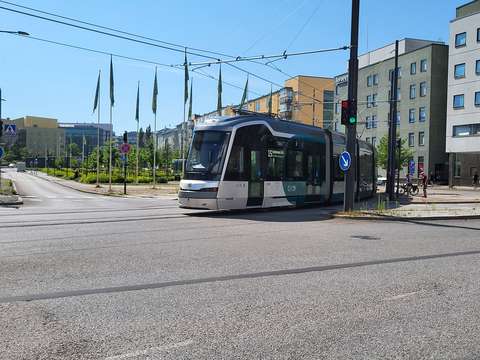
In the Helsinki Metropolitan Area, work has begun to assess traffic noise in accordance with the European Union’s Environmental Noise Directive. The assessment is carried out to map areas in which the noise levels exceed the guideline values and to determine how many residents are exposed to noise. Espoo, Helsinki, Vantaa, Kauniainen and the Finnish Transport Infrastructure Agency will cooperate to conduct the noise assessment on main and collector streets, roads and railways, tram traffic and the metro. The work will be implemented by Sitowise Oy. Environmental noise is one of the most important environmental problems in Europe and also a significant factor affecting the quality and health of the living environment in Finnish urban regions.
Noise assessments are carried out every five years
The traffic noise situation in Espoo and the Helsinki Metropolitan Area was last investigated in 2022. At the time, the result of the noise assessment was that approximately one in four Espoo residents live in a road traffic noise zone. The development of the situation in Espoo is assessed and compared with European cities every five years.
The assessment that has now been launched will be completed in summer 2027. The noise assessment will be carried out using the common European calculation model (CNOSSOS-EU), and a national noise assessment will be carried out simultaneously by using the common Nordic noise calculation models. When the report has been completed, the results will be published on the cities’ websites, where residents can familiarise themselves with the results and the noise maps.
Espoo will draw up a noise abatement action plan based on the results of the traffic noise assessment of the Helsinki Metropolitan Area. The results will serve as initial data for future noise abatement action plans of the cities and the Finnish Transport Infrastructure Agency.
Information on noise and noise abatement in Espoo can be found on the city’s noise abatement website.