Espoo continues to combat invasive species and invites residents to participate in the fight
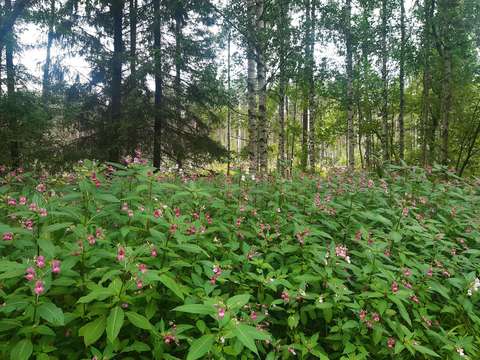
The city encourages all Espoo residents to participate in efforts to protect biodiversity. Together, we can significantly slow down the spread of invasive species and protect valuable natural areas in Espoo.
The city combats invasive species annually through its own functions and outsourced services. Many invasive species are also removed in connection with various construction and renovation projects. Cooperation with local residents, organisations and communities contributes significantly to Espoo’s efforts to eliminate invasive species.
Espoo is developing its control of invasive species by addressing the problem more effectively across city operations. The aim is to incorporate the guidelines and operating principles concerning invasive species permanently into Espoo’s operating practices, to improve the prevention of invasive species, and to raise awareness of invasive species among the city organisation and residents.
Removal of invasive species with residents
“All observations and prevention measures, including mowing of lupins and weeding of Himalayan balsams, help contain the spread of invasive species,” stresses Minna Oja, Invasive Species Coordinator at Espoo.
The city encourages residents, associations, companies, and educational institutions to participate in the combat against invasive species, for example, by organising species removal parties. People can also organise their own small parties to remove invasive species or root them out whenever they spot them around.
Instructions for identifying, reporting and removing invasive species are available on the Invasive Species page on the city’s website. At the end of April, Espoo held an online lecture on identifying and removing invasive species in collaboration with the Espoo Adult Education Centre Omnia. 26 people attended the lecture.
You can learn to remove invasive species in practice by participating in the removal parties organised by the city. Nature House Villa Elfvik is organising two invasive species removal parties in its area this year. Himalayan balsams, lupins and Japanese roses will be removed on 10 June 2026 from 5 to 7 p.m. and Siberian dogwood shrubs on 22 September 2026 from 5 to 7 p.m. Participation in these events requires pre-registration.
The Crowdsorsa mobile game, which has been used in past years, is not available in Espoo this summer due to delays in procurement. Espoo is considering using the mobile game again at future events.
New experiments to combat the Spanish slug and meadowsweet
In the summer, experiments to combat Spanish slugs will be carried out in different parts of Espoo. The idea is to test different collection containers where residents can dispose of the slugs they have collected. Slug prevention is most effective in the spring, and every slug collected in the spring has a huge impact on their numbers in the autumn. The use of ferric phosphate products will also be tested in connection with normal maintenance activities. The aim is to find ways to better control the spread of slugs in urban areas and to complement residents’ own prevention measures.
The city is involved in the Natural Resources Institute Finland’s project, testing the biological control of meadowsweet with Chondrostereum purpureum. The study is carried out in the nature reserves of Träskända and Jahtimetsä, where the widely spread meadowsweet shrubs are a major problem. In this area, invasive species will be controlled using various methods according to the agreed plan.
Further information:
- Combating invasive species in Espoo: Minna Oja, Invasive Species Coordinator, Public Works Department, minna.oja@espoo.fi, tel. +358 43 8272408
- Invasive species removal parties of Villa Elfvik: Katri Luukkonen, Planning Officer, Nature House Villa Elfvik, Environment and Building Control Department, katri.luukkonen@espoo.fi, tel. +358 43 8265253