By recognizing the symptoms of drug overdose, more deaths can be prevented
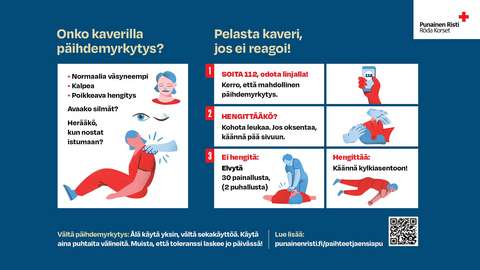
In Finland, people under the age of 25 make up an exceptionally high proportion of drug-related deaths – more than any other European country relative to population. Drugs cause more deaths among young people than traffic accidents. The municipalities and wellbeing services counties of the Helsinki metropolitan area will increase understanding of the symptoms of drug overdose and first aid through a joint campaign in April–May.
Although the number of drug-related deaths among the young has decreased since the peak in 2023, nearly one in five deaths among 15–24-year-olds is still caused by drugs.
According to the latest statistics from 2024, drug-related deaths are most common among young adults and people aged 40–44. People between the ages of 25 and 34 accounted for nearly one third of drug-related deaths.
Accidental drug-related deaths have decreased, but clearly more than half of all drug-related deaths are still accidental.
Poisoning deaths can be prevented if the symptoms are recognized
In Finland, drug-related deaths are usually caused by a state of poisoning which results from the simultaneous use of various substances, such as medicines and alcohol or drugs. The most common cause of drug-related deaths is the simultaneous use of opiates and benzodiazepines.
To prevent drug-related deaths, it is necessary for the symptoms of drug overdose to be better recognized than they are now. This also makes it possible to call for help in time. The life-threatening symptoms of poisoning range from easily detectable, such as convulsions, to vague, such as intense fatigue.
Typically, an emergency situation occurs when a heavily intoxicated person goes to sleep and is in danger of dying in their sleep due to respiratory depression or asphyxiation.
Knowledge of symptoms and first aid saves lives
Drug overdoses can happen anywhere, at any time. Anyone can run into a situation where a drug overdose requires immediate action, calling for help and first aid.
Knowledge helps in taking appropriate action. For this reason, the municipalities and wellbeing services counties of the Helsinki metropolitan area will increase understanding of the symptoms of drug overdose and first aid through a joint campaign in April–May. The campaign is partnered with the Finnish Red Cross.
“A drug overdose can look like just heavy intoxication or fatigue. This is why people often do not understand the gravity of the situation in time. With our campaign, we want to remind everyone that you should always call for help in uncertain situations: acting too early is not a mistake, but acting too late can cost a life. In an emergency, even a small amount of care and courage can save another’s life,” says Miia Myyryläinen, preventive substance abuse work expert at the City of Vantaa.
The sticker campaign, which will be seen along the key train and bus routes of Helsinki, Espoo, Kauniainen and Vantaa, will direct people to seek further information about drug overdose symptoms and first aid on the Red Cross’ website. In addition, information will be shared through the offices and digital channels of the cities and wellbeing services counties.
Helsinki, Espoo, Vantaa, Kerava and Kauniainen as well as the Western Uusimaa and Vantaa and Kerava wellbeing services counties will participate in the campaign, which will take place between April 27 and May 24, 2026.
By caring, we also help the people close to those who use drugs
Substance abuse is widely visible in society and affects not only those who use drugs, but also their loved ones, families and the communities in which they live. Läheistenpäivä (Loved Ones’ Day) on May 5 is also a reminder of this.
It is estimated that there are about a million people in Finland who are affected by the substance abuse of a loved one. The National Institute for Health and Welfare (THL) has estimated that there are 89,000 underage children in Finland whose biological parent or both biological parents have a serious substance abuse problem at some point before the child turns 18.
By helping those with substance abuse problems, we also support their families, friends and other loved ones and strengthen the wellbeing of society as a whole.