Street dust season is about to begin: street cleaning has started in Espoo
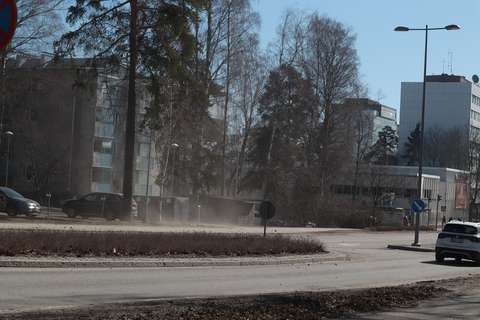
The annual spring street dust season is about to begin also in Espoo. Street dust weakens air quality and can cause symptoms even in healthy people. Possible rain and the spring street cleaning will bring some relief. HSY has also provided self-help tips on how to relieve symptoms.
Street dust mainly consists of finely ground asphalt and sanding gravel. Studded tyres in particular wear down asphalt and thus generate street dust. In Espoo, the dustiest areas are motorways passing through the city and Ring I, where driving speeds and traffic volumes are high.
"The dustiest areas are those with a lot of traffic. However, you don't have to avoid outdoor activities because of street dust. The air is cleaner just one block away from a busy street," says Nelli Kaski, Air Protection Specialist at HSY.
In the coming days and weeks, dust levels will vary depending on the weather. There is plenty of street dust in the air especially on sunny and dry days. Rain, on the other hand, moistens road surfaces and reduces dust.
Street cleaning has started in Espoo
Spring street cleaning removes street dust from road surfaces. On the main roads, dusting is also reduced by sprinkling road verges with a diluted salt solution during the worst dust days.
In Espoo, winter sand removal began on bus routes and roadways in early March. After that, the work will continue on pedestrian and cycling paths.
Follow the situation in Espoo:
- Street maintenance and spring cleaning in Espoo
- Real-time street dust levels in Espoo at HSY website(external link, opens in a new window)
- Progress of the spring cleaning on the map(external link, opens in a new window) (Select what information is shown on the map > Streets and green spaces > Katujen kunnossapito kartalla)
10 tips for the street dust season
Street dust can cause symptoms especially in young children, the elderly and people with respiratory or cardiovascular diseases. Typical symptoms include runny nose and coughing, itching of eyes and throat and shortness of breath, particularly among those with respiratory or heart conditions. Street dust can also cause irritation symptoms in healthy adults.
Nelli Kaski, Air Protection Specialist at HSY, gives ten tips on how to relieve symptoms caused by street dust and reduce the formation of street dust:
- Spend time outdoors further away from busy streets. The air is cleaner just one block away from a busy street. A good respirator, such as an FFP2 mask, may also help, but it is not suitable for everyone.
- Spend time in parks, forests or by the sea. Air quality is usually better in these places. Avoid heavy physical strain especially in high-traffic areas.
- Consider moving indoors if you experience severe irritation symptoms.
- Avoid ventilating your home through windows, especially during rush hours, if you live in a high-traffic area. Ensure that window and door seals are in good condition.
- Replace supply air filters in your home in spring and autumn. High-quality filters effectively reduce the amount of street dust entering indoors.
- Avoid unnecessary driving, as it stirs up street dust. Favour walking, cycling and public transport.
- If you drive, use non-studded winter tyres, as they produce less dust than studded tyres.
- Remember to follow vehicle relocation signs. Street cleaning slows down considerably if wrongly parked vehicles must be moved.
- Remove sanding gravel when it is wet. The use of leaf blowers to remove sand gravel is prohibited in the Helsinki metropolitan area and many other cities.
- Monitor air quality at hsy.fi/airquality(external link, opens in a new window).
Read more: