Cooperation between pre-primary education and school supports a safe learning path and motivates staff
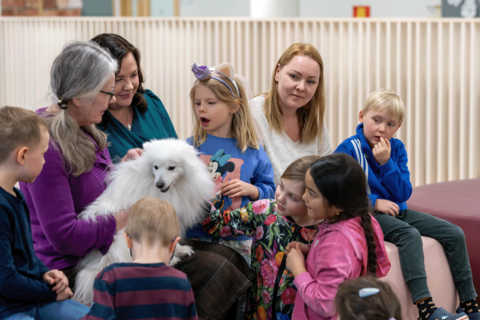
The Finnish-language pre-primary education and basic education in Espoo focus on pedagogical cooperation. Goal-oriented collaboration creates a safe transition to school for children. At the same time, it allows staff to make use of multiprofessional expertise and to carry out their work in ways that recognise children’s diverse strengths.
Espoo uses a pedagogical cooperation model in which all Finnish-language pre-primary education units have a designated partner school. Day-care centres and the school form a cluster that engages in systematic and goal-oriented cooperation. The activities are jointly led by the heads of day-care centres and the principal of the school. Cooperation is planned regularly and systematically to ensure learning opportunities for all children.
One cluster consists of Monikon, Vallipuiston and Ajurinmäen päiväkoti day-care centres and Leppävaaran koulu. In practice, cooperation has included the implementation of an elf-themed trail, skating and shared song sessions.
“The aim is for the school pupils to welcome the future first-grade pupils, and to give the pre-primary pupils the opportunity to see the school world in advance. This is because starting school can be very exciting,” says Riikka Immonen, director of Monikon päiväkoti.
Ritva Mickelsson, principal of Leppävaaran koulu, emphasises that cooperation facilitates the transition and builds a continuum for learning.
“It will make it easier for future first-grade pupils to adjust to what lies ahead, during the summer, while at the same time we blur the boundary between pre-primary education and school, building a coherent learning path.”
Children’s strengths first
Closer cooperation between pre-primary and basic education enables the consideration of the children’s individual strengths and needs.
“Our idea is that the school welcomes the children as they are, and that the teaching is organised based on the child’s needs. Every child comes to us with their own strengths, and it is our duty to support them. This is supported by the fact that we can share information and experiences,” says Mickelsson.
Sanna Lappalainen, an early childhood education teacher working at the Monikon päiväkoti, believes that cooperation also supports everyday success at work.
“When we know each other’s working methods and cooperate closely, we will be able to answer children’s questions better during the spring.”
In Espoo, it is believed that the most important thing is to maintain children’s joy and enthusiasm. Playfulness is more important than learning numbers or letters within a certain time.
“We always remember that if a child learns to work in a group and wants to learn, it is a sufficient starting point,” says Lappalainen.
Cooperation strengthens the staff
In the Leppävaara area cluster, collaboration is seen as highly motivating and inspiring for staff. For this reason, it is important to allocate dedicated time for it.
The cooperation offers an excellent opportunity to share professional expertise, as well as observations and insights made in everyday work. Familiar colleagues are easier to approach, seek answers to questions and start discussions.
“The work is significantly easier, when you can contact others at any time,” says Lappalainen.
The partners see that pedagogical cooperation can also bring added value to families. At the same time, it provides staff with the opportunity to increase the impact of their work and thus its meaningfulness.
“For example, we have discussed increasing the participation of multilingual families,” says Mickelsson.
In addition, the model maintains the playfulness and positive spirit required in the work. It is easier to come up with new ideas together, and the support of the cooperation group lowers the threshold for testing new ideas. In Espoo, new employees are also expected to have a playful attitude and not be afraid of making mistakes.
“We approach our work with a smile and a relaxed attitude,” Mickelsson sums up.