Reduce emissions by burning wood correctly
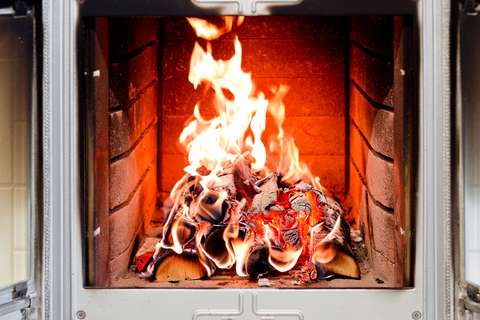
In the capital region, emissions from wood burning are highest in Espoo. This is because most of the region’s detached houses are located in Espoo. The City of Espoo reminds residents that using lower-emission wood-burning methods can help protect their own and their neighbours’ health and improve local air quality. Espoo’s Environmental Protection Unit monitors compliance with laws related to emissions.
Wood burning produces emissions such as fine particles and PAH compounds, which impair air quality and are harmful to health. In the Helsinki region, wood burning generates more fine particle emissions than traffic exhaust.
“Wood burning worsens air quality most in densely populated detached house areas, especially on calm, frosty evenings. With proper burning techniques, emissions are significantly lower, heat is better utilized, and the fireplace stays in better condition,” says HSY air quality expert Nelli Kaski.
Correct burning can significantly reduce emissions
Although many consider themselves experienced wood burners, low-emission burning techniques are not always mastered. Every wood burner can significantly influence the air quality of their living environment by burning correctly. In addition, new fireplaces are generally less polluting than older ones.
Harmful emissions occur especially when burning waste or wet wood. Poor burning practices produce many times more emissions compared to skillful burning of dry wood.
“Our report shows that some residents burn trash in their fireplaces. Burning trash produces large amounts of harmful emissions and also damages the fireplace,” Kaski says.
HSY’s report indicates that nearly 80 percent of residents who burn wood use dry firewood.
“An easy way to reduce emissions is to burn dry wood. Most people already do this. If possible, the best place to store wood is a ventilated woodshed, which keeps the wood dry,” Kaski says.
Smoke colour reveals the amount of emissions
The colour of the smoke coming from the chimney shows how clean the combustion is. The lighter, the better.
“If dark or acrid smoke comes from the chimney, emissions are high and combustion is not energy efficient. The reason may be too little combustion air or burning trash or overly moist wood,” Kaski says.
Kaski gives 7 tips for low-emission wood burning. Try these tips and see if the smoke becomes colourless:
- Remove old ashes.
- Burn only dry wood. Bring firewood indoors 1–2 days before use.
- Do not burn trash.
- Fill the firebox only halfway. Place larger logs at the bottom and smaller ones on top. Leave space on the sides.
- Light from the top unless instructions say otherwise. Use wood-based kindling such as birch bark, chips, sticks, or ready-made wood-based fire starters.
- Adjust the air supply. Combustion should not be too strong and roaring, nor too weak and smoldering.
- Fireplace age and type matter. New fireplaces are often less polluting than old ones. For example, a heat-retaining stove with doors has better efficiency than an open fireplace and produces less emissions.
Read more: