New tool to boost cities’ effectiveness – Espoo served as the EU project’s lead partner
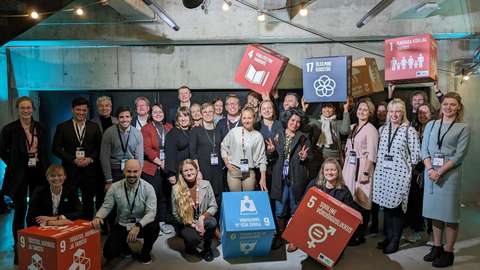
Developed in cooperation with eight European cities, the tool helps cities develop the activities of their organisations and the effectiveness of their city communities.
Led by the City of Espoo, the ‘Cities for Sustainability Governance’ (CSG) project is coming to an end in December 2025. The key insight of the tool created by the participating cities is that the operating models used by a city organisation have a direct impact on how productive their development work is.
The tool has identified three ways to arrange a city’s development work: the traditional hierarchical approach, based on cooperation and partnerships, or emphasising experimentation and innovation.
“We call the new tool the CSG framework, in which a city’s development work can be arranged using the traditional line model, the network model or the accelerator model. It has been great to be involved in developing a tool that supports cities in improving their strategic development and effectiveness, also in the coming years,” says Development Manager Ville Taajamaa.
As cities are responsible for the implementation of almost all of the UN’s Sustainable Development Goals (SDGs), it is crucial to boost the effectiveness of cities’ work, both locally and in international networks.
The results of the cooperation show that successful cities share the ability to combine the provision of everyday services with long-term development together with local and international partners. This balance is well illustrated by the term ‘ambidexterity’: the ability to provide services efficiently while developing new, more efficient ways to provide them.
Espoo served as the lead partner of the CSG project since June 2023. The project has developed new ways of integrating the SDGs into city operations. In addition to Espoo, the network included the following European cities: Tallinn (Estonia), Jablonec nad Nisou (Czech Republic), Košice (Slovakia), Mannheim (Germany), Gabrovo (Bulgaria), Agios Dimitrios (Greece), Valencia (Spain) and Braga (Portugal).
The project led by Espoo ends this month, but the work will continue in a new URBACT network, in which Espoo is one of the members. The aim of the Human Power Hub network is to build a “City Factory” where the members of the community can create solutions for urban development. The new tool will also support the strategic development of cities in the future.
Enquiries
Ville Taajamaa, Development Manager, ville.taajamaa@espoo.fi, tel. +358 40 5083806
Cities for Sustainability Governance (CSG) project’s website(external link, opens in a new window)
Check out the new ‘Stories of European Cities’ book, summarising the results of Espoo’s pioneering work in promoting sustainable development.