Home in spaciously built Soukka
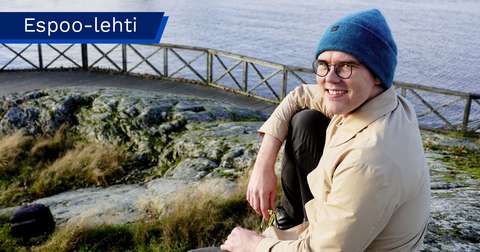
An urban geography researcher appreciates the nature-inspired suburban design of the 1960s and 1970s.
Urban geography researcher Oskar Rönnberg has lived in Soukka for three and a half years. He is originally from Kirkkonummi, his spouse is from the Espoonlahti area, and they have relatives living nearby – so Soukka was a natural choice when the family was looking for a home.
“One factor in favour of Soukka was that housing prices here are lower than in other similar districts in Espoo,” he tells us.
The purchase decision was also influenced by the metro, which was still under construction at the time.
“We live right next to a metro station, so my commute to the centre of Helsinki is so smooth from door to door that I have to find other ways to get my daily exercise.”
Soukka is a suburb dominated by apartment buildings, built in the 1960s and 1970s. In keeping with the spirit of the time, the buildings were constructed with generous spacing, leaving forested rocky areas in between. There are also detached houses close to the sea.
“We live in one of the first houses built here. I’ve seen photos where the house is three years old, but the trees around it are taller. This means that the block was built without felling all the trees on the plots. Today, we no longer build like this.”
Rönnberg is a bit concerned about the infill construction planned in Soukka.
“It is understandable that the City of Espoo wants more apartments close to metro stations,” he says.
Infill construction is often justified to residents by saying it will ensure better services, but Rönnberg says that this is not always the case.
“On the other hand, research has shown that having nature around you and being able to see trees from your window are very important for residents’ comfort and wellbeing. I also hope that the infill construction is implemented with respect for the rocky landscape typical of Soukka.”
Soukka is designed so that people can move around using pedestrian and cycling routes without having to cross large roads, making it a safe district for children. In addition, the yards of apartment buildings are green and suitable for play.
“In a way, traffic and car parks are on the edges and the centre is practically car-free.”
Rönnberg also appreciates the floor plans of the apartments from the 1960s and 1970s.
“The apartments are spacious and usually have large windows facing at least two directions. The design solutions are much better than in new buildings.”
Soukka
- A district in southwest Espoo, in the Greater Espoonlahti area on the Gulf of Finland
- Swedish name: Sökö
- The district has a school, day care centres and an old shopping centre
- Good opportunities for outdoor activities
- Tapiola can be reached by metro in about fifteen minutes
- The number of residents was 8,236 in 2020
Text: Katariina Krabbe
This article was originally published in the Espoo-lehti magazine 3/2025. Read other Espoo-lehti articles.
The duration of the metro ride from Soukka to Tapiola was corrected in the article.